
Story and Structure of XUCLA
"Those who have less in life should have more in law." Few statements capture the spirit of the Xavier University Center for Legal Assistance (XUCLA) more profoundly than this enduring principle. For three decades, it has served not merely as a guiding motto but as a call to action, shaping generations of law students into lawyers who understand that the practice of law is, above all, an act of service.
In 2026, XUCLA celebrates its 30th Anniversary, marking three decades of faithful commitment to access to justice, human rights, and the formation of socially responsive legal professionals. From its humble beginnings as a small legal aid initiative in 1996 to its present role as one of Mindanao's leading university based legal aid centers, XUCLA has continually evolved while remaining steadfast in its founding mission.
Its history is more than a chronology of milestones. It is the story of communities empowered through legal education, clients who found hope in moments of uncertainty, students transformed through service, and lawyers who discovered that justice is most meaningful when it reaches those who need it most.
A Vision Born from Service
The establishment of XUCLA on July 6, 1996 came at a time when the need for accessible legal services in Northern Mindanao was increasingly evident. While legal institutions existed, many ordinary Filipinos remained unable to obtain meaningful legal assistance because of financial limitations, geographical barriers, or unfamiliarity with the legal system.
Recognizing this reality, Xavier University sought to create an institution that would bridge the gap between legal education and public service.
Inspired by the pioneering work of the Ateneo Human Rights Center in Manila, XUCLA was envisioned as more than a legal clinic. It was conceived as an institution where legal knowledge would become a tool for social transformation, and where future lawyers would learn not only the letter of the law but also the responsibility of using it in the service of others.
The Center was established with the support of the PRODEM Misamis Oriental Project, whose partnership enabled XUCLA to undertake its earliest community based initiatives. These programs introduced law students to communities where legal needs were often intertwined with poverty, inequality, and limited access to government services.
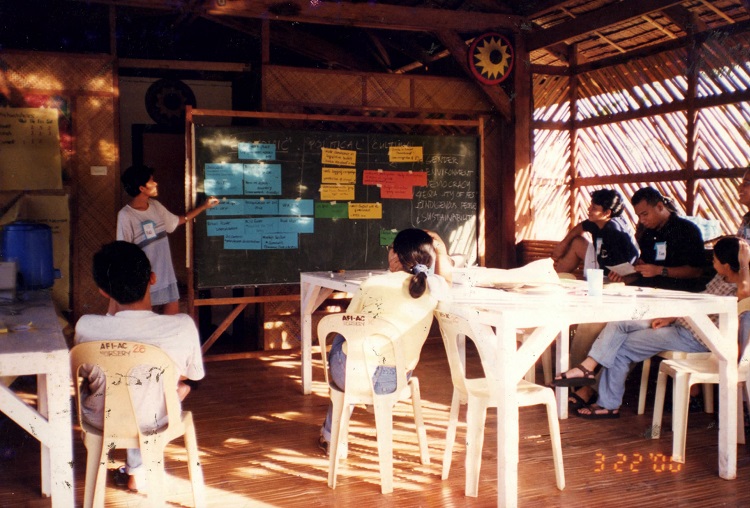
Rather than waiting for clients to come to the University, XUCLA brought legal education and legal assistance directly into communities. Early outreach efforts in Tagoloan, Villanueva, and Balingasag demonstrated that legal aid could become an instrument of empowerment rather than simply dispute resolution.
These formative years established what would eventually become one of XUCLA's defining characteristics: legal education rooted in immersion, accompaniment, and solidarity.
Institutional Recognition and Growth
The Center's vision quickly gained institutional recognition.
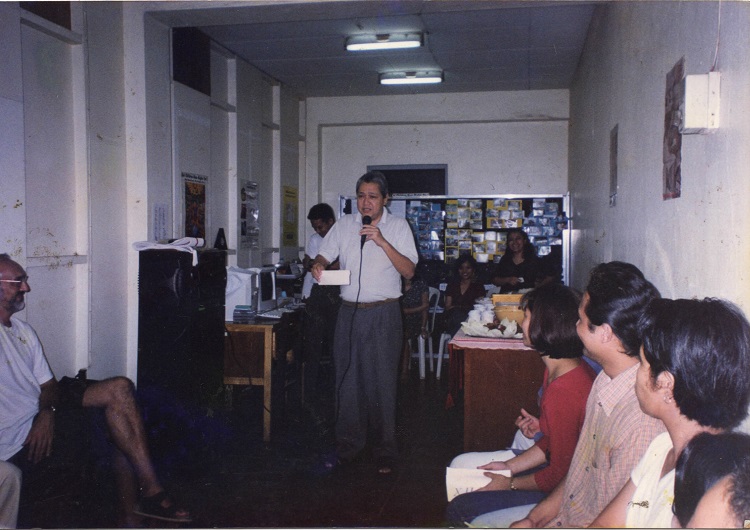
During the Academic Year 1997 to 1998, then Dean Atty. Romulo V. Borja formally designated XUCLA as the official legal aid institution of the Xavier University College of Law. This recognition represented much more than administrative approval. It affirmed that legal aid was no longer merely an extracurricular endeavor but an essential component of legal education itself.
From its earliest days, the Center understood that competence and compassion must develop together. Student volunteers learned legal research, client interviewing, and legal writing alongside humility, empathy, and ethical responsibility. Every consultation became both a learning opportunity and a reminder that behind every legal issue stood a human story.
As the years passed, the Center steadily expanded its reach.
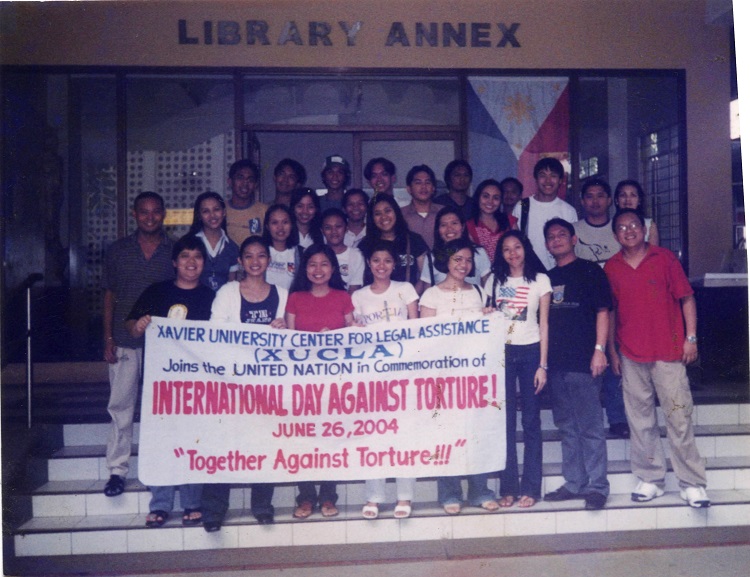
From a traditional legal aid office, XUCLA evolved into a multidisciplinary institution engaged in legal counseling, policy advocacy, human rights education, community organizing, legal research, and public interest initiatives. It forged partnerships with local governments, civil society organizations, schools, people's organizations, and national advocacy networks, extending its influence well beyond the University campus.
Throughout this evolution, one principle remained constant: the law should always be used in the service of justice, particularly for those who have the least access to it.
Responding to a Changing Legal Landscape
The legal profession has undergone significant changes over the past three decades, and XUCLA has consistently adapted to meet new challenges while remaining faithful to its mission.
The adoption of the Supreme Court's Revised Rule 138 A on the Law Student Practice Program ushered in a new era of clinical legal education in the Philippines. Rather than viewing these reforms as merely regulatory requirements, XUCLA embraced them as opportunities to deepen experiential learning.
Today, the Center functions as a comprehensive legal clinic where law student practitioners actively participate in legal counseling, legal research, drafting pleadings, client interviews, document preparation, and even court appearances under the close supervision of licensed lawyers.
This integration of academic instruction with supervised legal practice has transformed XUCLA into an institution where students do not simply study law. They learn to practice it responsibly, ethically, and compassionately.
A Community Built on Shared Leadership
One of XUCLA's greatest strengths is its organizational structure, which reflects the Center's belief that leadership is best exercised collaboratively.
At the forefront is the Executive Director, appointed by the University President upon the recommendation of the Dean of the School of Law. The Director provides the strategic vision that guides the Center's operations, supervises programs, represents XUCLA before institutional and external partners, and creates specialized teams to address emerging legal and organizational needs.
Working alongside the Director are the Supervising Lawyers, whose role extends far beyond legal oversight. They mentor student practitioners, review legal work, organize case conferences, ensure ethical compliance, and accompany students throughout their formation as future members of the legal profession. Their presence ensures that every service rendered by the Center meets the standards of professional competence while remaining faithful to XUCLA's mission of public service.
Equally distinctive is the Center's emphasis on student leadership.
The interns, composed of Student Directors, Senior Intern Team Leaders, and representatives from both junior interns and senior mentors, perform significant governance functions within the organization. They oversee recruitment, disciplinary processes, office policies, and organizational development, ensuring that students become active participants in shaping the Center's culture and operations.
The Student Director for Internal Affairs focuses on intern welfare, organizational development, and special projects, while the Student Director for External Affairs leads communications, public policy initiatives, and rights literacy programs that strengthen XUCLA's engagement with communities.
This collaborative model reflects an important lesson that XUCLA has consistently imparted to its students: leadership is not simply about authority but about stewardship, accountability, and service.
Forming Lawyers Through Experience
Perhaps no aspect of XUCLA better illustrates its educational philosophy than its carefully designed progression of student formation.
Every XUCLA intern begins as a Junior Intern, where the focus is on learning fundamental skills through direct participation in legal aid work. Junior interns prepare legal responses, assist in case teams, participate in affidavit and pleading preparation, and contribute to the many operational teams that sustain the Center's programs.
After completing a year of internship, students may advance to become Senior Interns, assuming greater responsibilities as mentors, clinic leaders, project coordinators, externs, and leaders of specialized teams.
This progression is intentionally designed to cultivate not only legal competence but also character. Students gradually move from receiving guidance to providing it, from learning leadership to exercising it, and from serving individual clients to mentoring future generations of XUCLA interns.
The Center itself reminds every intern that they are being formed to become leaders not only of XUCLA but also of the Xavier Ateneo Law community and, ultimately, of the legal profession itself.
An Ecosystem of Service
Over the years, XUCLA has developed what it appropriately describes as an integrated ecosystem of legal education and public service.
At its center is Tabang Legal, the Center's primary legal counseling and assistance program. Through a carefully designed intake process, legal concerns submitted through online platforms and other channels are evaluated according to urgency and complexity before being assigned to supervising lawyers or student practitioners.
Complementing Tabang Legal are CLEP 1 and CLEP 2, the Center's Clinical Legal Education Programs. CLEP 1 focuses on rights literacy, legal research, policy advocacy, and human rights education, while CLEP 2 immerses students directly in legal counseling and client assistance through XUCLA's six legal clinics.
Students further broaden their practical experience through the Externship Program, where they complete at least one hundred twenty hours of supervised legal work with government agencies and nongovernmental organizations. These experiences expose them to diverse legal environments while reinforcing the importance of public service and professional responsibility.
Together, these interconnected programs create a continuous cycle of learning, service, reflection, and leadership that distinguishes the XUCLA experience from traditional classroom instruction.
Justice Beyond the Courtroom

While litigation remains an important component of legal practice, XUCLA has long recognized that justice often begins long before a case reaches the courts.
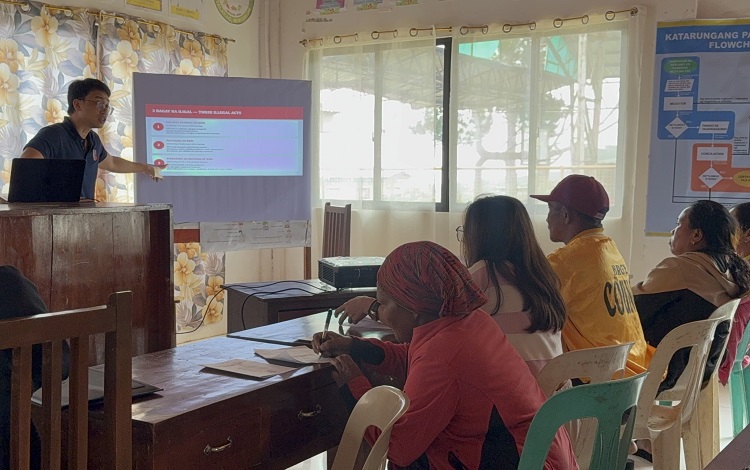
Many of the Center's initiatives focus on legal literacy, community education, policy advocacy, and empowerment. Rights literacy seminars, community dialogues, public policy engagements, and human rights advocacy have enabled communities to better understand and exercise their legal rights before disputes escalate into litigation.
The Center likewise prioritizes assistance to sectors that have historically faced barriers in accessing legal services, including indigenous peoples, farmers, laborers, urban poor communities, women, children, survivors of gender based violence, victims of human rights violations, and other marginalized groups.
This developmental approach reflects XUCLA's broader understanding that legal aid is not merely about resolving disputes but about empowering communities to participate fully in the pursuit of justice.
A Legacy of Formation
Over thirty years, thousands of clients have sought assistance through XUCLA. Hundreds of law students have passed through its programs. Countless hours have been devoted to legal counseling, community outreach, policy advocacy, and public service.
Yet statistics alone cannot fully capture the Center's legacy.
Its true impact is found in the confidence of a client who finally understands their rights, the resilience of a community empowered through legal education, the compassion of a student who discovers the human face behind legal doctrine, and the quiet dedication of every lawyer, intern, staff member, and volunteer who has chosen to place their knowledge at the service of others.
For thirty years, XUCLA has demonstrated that legal education is at its best when it is inseparable from justice, and that justice is at its fullest when it is accompanied by compassion.
Looking Toward the Next Thirty Years
As the Xavier University Center for Legal Assistance celebrates its thirtieth anniversary, it stands not only as an institution with a proud history but as a community with an enduring mission.
The challenges facing society continue to evolve. New legal issues emerge. Communities continue to seek protection, empowerment, and access to justice. Future generations of law students will encounter realities different from those faced by the Center's pioneers in 1996.
Yet the heart of XUCLA remains unchanged.
Its commitment to forming lawyers who combine intellectual excellence with social responsibility continues to define its work. Its belief that legal education must be grounded in service remains as relevant today as it was three decades ago. And its unwavering conviction that "those who have less in life should have more in law" continues to inspire every legal consultation, every outreach activity, every student formed, and every community served.
As XUCLA enters its fourth decade, it carries forward not merely thirty years of accomplishments, but thirty years of relationships, learning, advocacy, and hope. It celebrates a legacy built by visionary leaders, dedicated faculty, supervising lawyers, staff, alumni, student practitioners, partners, and countless communities that have entrusted the Center with their stories.
The story of XUCLA is still being written.
May the next chapters continue to affirm what the past thirty years have already proven: that when law is guided by justice, animated by compassion, and dedicated to service, it becomes a powerful instrument for transforming lives and building a more just society.