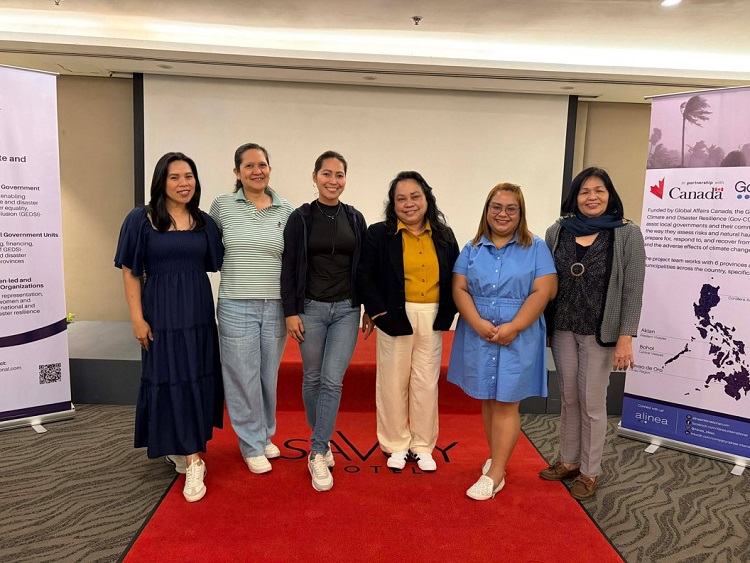
Cagayan de Oro and Bukidnon representatives to the "BAYInihan sa Klima: Upskilling on GEDSI in Climate and Disaster Resiliency";
Xavier University’s Social Development Office was represented by Ms Victoria Melissa C Pulido, Service- Learning Formator (second from right).
Xavier University - Ateneo de Cagayan, through its Social Development Office, has officially joined the growing resource pool of Gender Equality, Disability, and Social Inclusion (GEDSI) practitioners in the region by participating in the “BAYInihan sa Klima: Upskilling on GEDSI in Climate and Disaster Resiliency,” held at the Savoy Hotel from 24 to 26 March 2026.
This upskilling workshop is part of the Governance for Climate and Disaster Resilience (Gov-CDR) project, a six-year initiative funded by Global Affairs Canada (GAC) and led by Alinea International that seeks to strengthen community resilience by elevating the leadership of women-led organizations, Indigenous Peoples, and persons with disabilities in climate and disaster risk reduction efforts.
Representing the academe were Ms Victoria Melissa C Pulido, Formator for Service Learning of Xavier University’s Social Development Office, and Ms Marichu Montecillo, Director of the Gender Research Center at Bukidnon State University. These academic perspectives were complemented by the administrative and policy expertise of the LGU and national government, represented by Ms Jemma Paglinawan, GAD Focal of the Provincial Government of Bukidnon, and Ms Rhona Abadilla, DILG Provincial Director. Rounding out the group was Ms Virginia Pacunio, Executive Director of PDSM, who provided insights from the non-government and grassroots sector. Together, these leaders shared collective strategies and addressed the challenges of applying a GEDSI lens to local risk assessments and disaster governance.
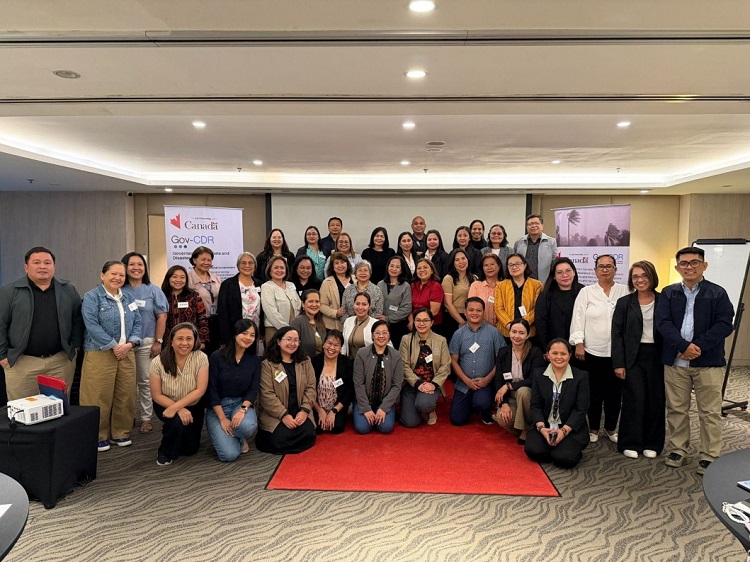
Representatives from LGUs, NGOs, and the academe across Bukidnon, Cagayan de Oro, Davao de Oro, Cebu, Bohol, Aklan,
Kalinga, and Samar participated in the 'BAYInihan sa Klima: Upskilling on GEDSI in Climate and Disaster Resiliency
Participants engaged in deep-dive sessions on intersectionality, recognizing that while gender is a primary factor, it cuts across other social identities such as age, disability, ethnicity, and income. This approach allows practitioners to understand how these overlapping identities create unique vulnerabilities and specific consequences during climate disasters. By exploring the life cycles of different age groups, the definitions of disability, and the specific rights of Indigenous Peoples, the delegation learned to identify social categories of exclusion that are often overlooked in standard planning. This intersectional lens is vital for ensuring that "inclusive excellence" moves from a concept to a practical reality in regional governance.
A significant portion of the training was dedicated to the practical application of GEDSI analysis tools within the conduct of disaster and climate risk assessments (CCRA). The delegation utilized gender analysis frameworks to identify strategies and actions for mainstreaming GEDSI directly into local planning.
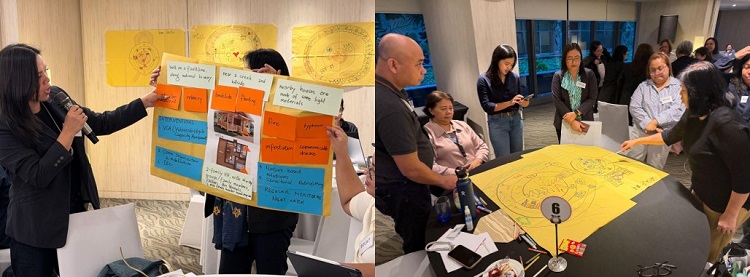
Delegates engage in the practical application of GEDSI tools, identifying strategic actions to
mainstream inclusion within local climate and disaster risk assessments.
The workshop empowered practitioners to integrate GEDSI into CCRAs, ensuring that risk assessments account for the diverse needs of the community based on gender, age, disability, and ethnicity. Participants also explored how to transform power dynamics by applying the Feminist Leadership Diamond to address the unequal power structures that impact climate resilience. Furthermore, the sessions emphasized institutionalizing safe spaces by implementing survivor-centered approaches and addressing Gender-Based Violence (GBV) and sexual exploitation within disaster management programs.
The program concluded with the establishment of a local GEDSI Resource Pool, ensuring that climate adaptation and mitigation efforts in Northern Mindanao remain inclusive, equitable, and grounded in transformative and inclusive leadership.