
In celebration of Women’s Month 2026, Xavier University, through the Gender and Development and the Office of the Mission and Ministry cluster, proudly joins the national observance under the recurring theme, “WE (Women and Everyone) for Gender Equality and an Inclusive Society.” This year’s sub-theme, “Lead Like the Babaylans, Filipinas!” honors a tradition of women’s leadership rooted in courage, wisdom, service, and community-building.
Babaylans were indigenous religious leaders in pre-Spanish Philippines, particularly in the Visayas. They served as spiritual authorities and intermediaries between the community and the spirit world, guiding their people in matters of faith, healing, and communal life. As priests or priestesses, they acted as mediators between the people and the spirits (anitos or diwatas), leading rituals and sacrifices such as pagdiwatas or paganitos. They interpreted omens, foretold events, performed healing and spiritual ceremonies, and presided over important religious practices of the community (Cullamar, 1985).
During the Spanish and early American periods, Babaylan leadership evolved in response to colonial rule. Babaylanism developed into a religio-political movement that blended indigenous beliefs with elements of Catholicism. In places such as Negros, figures like Isio embodied both spiritual authority and organized resistance. In this way, Babaylanism became not only a religious tradition but also a form of protest and assertion of cultural identity (Cullamar, 1985).
As a university committed to forming socially responsible and compassionate individuals, we recognize the contributions of women who inspire positive change and uphold equality and inclusion. This celebration is both a tribute to their achievements and a call for everyone, administrators, faculty, formators, non-teaching staff, students, third-party personnel, parents, and alumni to actively participate in creating a more just, equitable, and inclusive society.
Let us continue to uplift, support, and empower women, following the legacy of the Babaylans who led with integrity, resilience, and a strong sense of community. Together, WE can help create a society where leadership, opportunity, and dignity are shared by all.
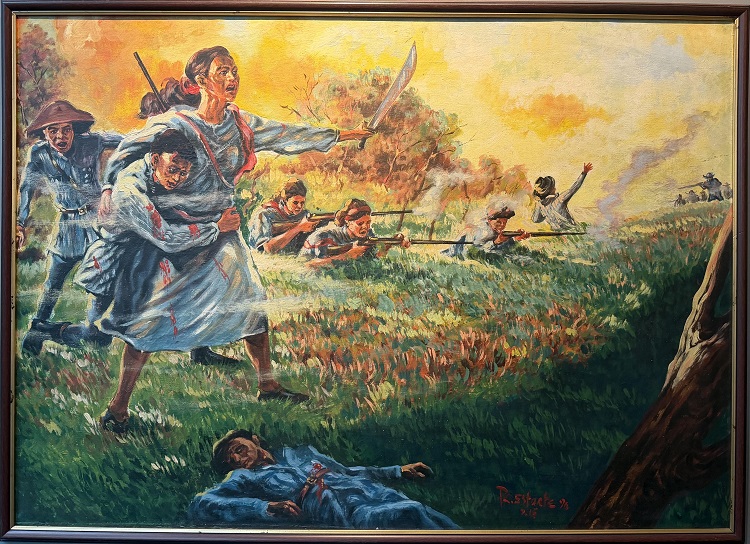
Arcadia Valenzuela: Heroine of Cagayan de Oro
During the Filipino-American War
During th inception of the American Regime in the Philippines, the people of Misamis Oriental resented and opposed the occupation. Some of the leaders of the province created military organizations to fight against the American forces that were expected to arrive.
One of these leaders was a woman named Arcadia Valenzuela. She organized a troop of women, mostly from Lapasan. Together with the men, the women troops gathered in the public plaza, now Gaston Park, for drills and military instructions.
These armed women were determined to fight side by side with the men to defend their people, home, and country from the new colonizers. Arcadia lived into a ripe old age.
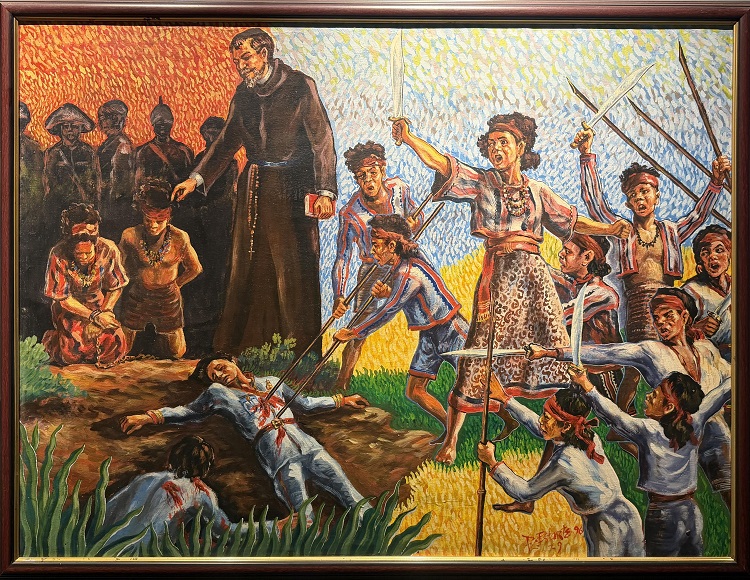
Salud: The Early Revolutionary Woman of Cagayan de Oro
In 1651, there was a political rebellion by the natives against the presence of the Spanish regime in Cagayan, which extended all the way from Iligan to Butuan and Camiguin. This disturbed the missions and killing some of the missionaries.
In 1659, a woman by the name of Salur or Salud was one of the leaders of the rebel groups in Cagayan who was a baylan (shaman/priestess) and accused as a witch because she was pagan as she worshipped the diwatas (nature spirits) and was not a Christian believer. She was accused to be propagating against the Christian religion and against Spain. Salud had many followers holding an impregnable stronghold in the interior mountains, thus the Spanish government could not capture her.
The parish priest of Cagayan, Fr Nicolas de la Madre decided to use a strategy for Salud’s capture by going to the forest alone to convert the followers of Salud and made use of these men to invade the bastion of the rebels. Finally, Salud and her son Apolinar, and few others who were the main accomplices of the rebellion were captured and brought to Cagayan where they were sentenced to death.
Photos are taken from the XU Museo de Oro/XCCA Collections
Artist: Pennessencio “Nonoy” Estarte