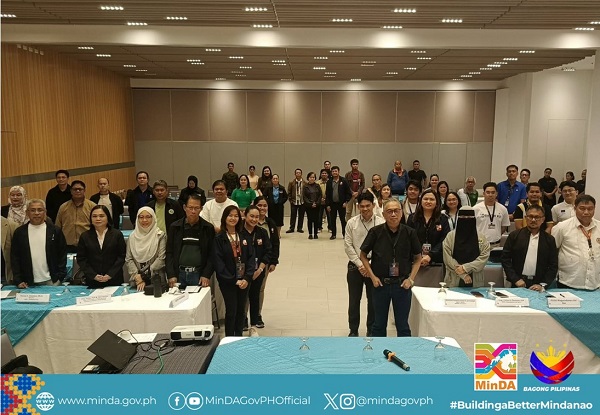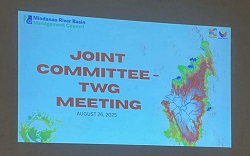
The Mindanao River Basin Management Council (MRBMC) Technical Working Group (TWG), led by the Mindanao Development Authority (MinDA), adopted four resolutions during its meeting in General Santos City on 26 August 2025, prioritizing urgent interventions on flood mitigation and watershed management across the Mindanao River Basin (MRB).
One of the key resolutions was the formal endorsement of the Mindanao River Basin Landscape Risk Assessment (MRB-LRA), a study by Xavier University – Ateneo de Cagayan. Conducted under the ACCESS Project with support from the European Civil Protection and Humanitarian Aid Operations (ECHO) in partnership with various NGOs in the Philippines. The MRB-LRA stands as the most comprehensive study yet of the basin and its surrounding regions, tracing how the changes in the landscape, be it forest, and river also reshapes the lives of people—reminding us that resilience is as much about communities as it is about terrain.
“The MRB is the second largest river basin in the country covers 21,503 square kilometers across 10 provinces and 6 chartered cities. (Mindanao Development Authority 2025)” In the final report of the LRA of Xavier University, the study emphasized that flooding is largely driven by deforestation, unregulated land-use change, and the impacts of climate change, rather than dam releases one. The study also highlighted the deteriorating water quality of the Pulangi River system, the emergence of new landslide-prone areas in upland Bukidnon, and the compounded vulnerabilities of conflict-affected communities in Maguindanao
To address these challenges, the MRB-LRA outlined strategic recommendations such as enhancing early warning systems, strengthening inter-agency coordination, institutionalizing sustainable watershed management, and ensuring inclusive governance that engages Indigenous Peoples, women, and youth.
Alongside the LRA adoption, the TWG also passed resolutions urging the Department of Public Works and Highways (DPWH) Region XII to fast-track the repair of the Pulangi River revetment in Pagalungan, Maguindanao del Sur, and recommending intensified monitoring of infrastructure projects through the establishment of an Infrastructure Monitoring Advisory Group (IMAG).
These resolutions come in the wake of persistent flooding incidents across the basin, including the recent August 20 scouring in Maguindanao del Sur that threatened to cut off the Cotabato–Davao Highway.
The MRBMC TWG’s adoption of the Xavier University-led study represents a significant step in institutionalizing science-based decision-making in basin management. The endorsement ensures that the MRB-LRA will serve as a key reference document for future programs and policies aimed at safeguarding communities and advancing sustainable watershed management.
Xavier University’s Commitment
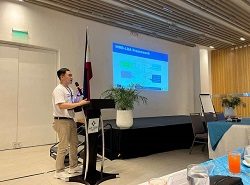
For Xavier University, the adoption of the MRB-LRA is more than an academic milestone — it is a living testament to the university’s mission of engaging knowledge with action, science with community, and research with responsibility. By walking alongside local governments, NGOs, and communities across Mindanao, the university continues to weave evidence into stories of resilience, making data not just numbers on paper, but pathways toward safer and more sustainable lives.
As the basin faces the unrelenting challenges of climate change, urbanization, and conflict, Xavier University reaffirms its commitment to be present: as a partner, as a servant-leader, and as a bridge between science and society. Because in the end, resilience is not just about resisting the floods, but about listening to the river, learning from its rhythms, and standing together as one basin, one Mindanao.