Article by: Adlai Manuel Ong
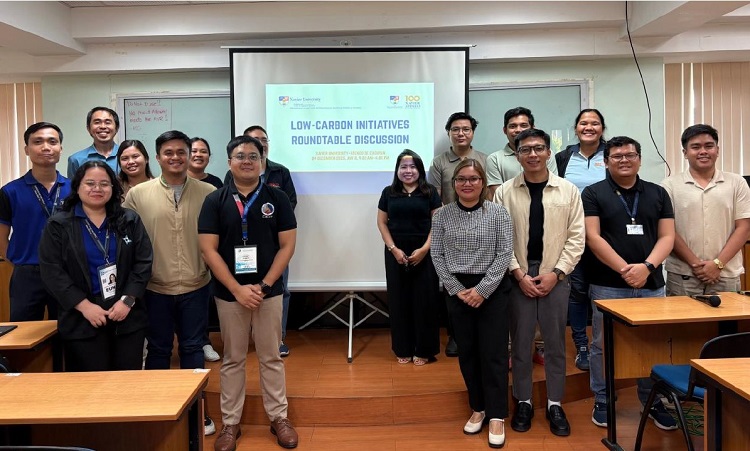
On 9 December 2025, Xavier University–Ateneo de Cagayan convened stakeholders from the academe, government, and private sector for the Low-Carbon Initiatives Roundtable Discussion at AVR 8 from 9:00 AM to 3:00 PM. The event served both as a public forum and a data-gathering activity supporting a forthcoming policy study on climate governance in Cagayan de Oro City.
 The forum forms part of a research collaboration between Xavier Ateneo and the Philippine Institute for Development Studies (PIDS), titled “Laying the Groundwork for a Low-Carbon Future: Governing Climate Experiments in Cagayan de Oro.” The study aims to map existing low-carbon initiatives and examine how these are governed, coordinated, and enabled by local government. The research team—composed of Fr Mars P Tan, SJ, Engr Dexter S Lo, Engr Jefferson R Vallente Jr, Ms Ruby Jane B Rivera, and Mr Jhon Louie Sabal—brings together expertise in governance, engineering, economics, and sustainability. Insights gathered from the forum are intended to directly inform the policy paper, with the long-term aim of proposing a policy framework that may guide local and national climate action.
A Shared Responsibility for Climate Action
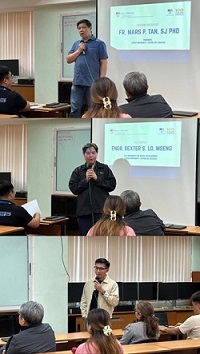
Fr Mars P Tan, SJ, University President of Xavier University-Ateneo de Cagayan, opened the forum by welcoming participants from various companies, government agencies, and academic institutions, emphasizing that meaningful solutions emerge when knowledge is shared and grounded in real-world experience.
Engr Dexter S Lo, Vice President for Social Development, presented the forum’s rationale, outlining three guiding principles: the university’s recognition that it does not have a monopoly of knowledge; the importance of maximizing diverse networks and expertise; and Xavier Ateneo’s commitment to Laudato Si’, which frames climate action as both a moral and developmental responsibility.
Learning from Global and Local Low-Carbon Models
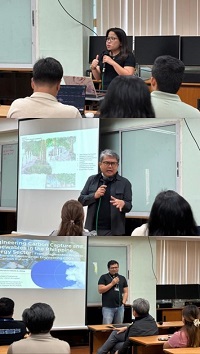
The morning session began with a presentation by Ms Ruby Jane B Rivera, Chairperson of the Department of History and International Studies, on “Low Carbon Town Models in the APEC Region.” She situated local initiatives within the Paris Agreement and regional experiences, underscoring the role of cities as both major emitters and key sites for innovation when supported by responsive governance.
This was complemented by a presentation on Project Lunhaw, Cagayan de Oro City’s urban greening initiative. Project Head Patrick U Gabutina described the program as an LGU-led effort integrating climate resilience, flood mitigation, walkability, and social inclusion, demonstrating how local governments can initiate low-carbon interventions while engaging communities and private partners.
Engineering the Low-Carbon Transition
Engr Jefferson R Vallente Jr, Assistant Dean of the College of Engineering, delivered a presentation on “Engineering Carbon Capture and Renewables in the Philippine Energy Sector,” highlighting carbon capture, renewable energy, low-carbon transport, and energy efficiency in the Mindanao context. He emphasized that the main challenge lies not in technology availability but in fragmented initiatives and governance. He called for a systems-based approach that aligns engineering solutions with policy frameworks and development goals.
An open forum moderated by Mr Jhon Louie Sabal, Chairperson of the Department of Economics, followed, where participants discussed regulatory environments, collaboration, and stakeholder roles. The discussions highlighted the need for enabling policies, clearer LGU mandates, and sustained public–private partnerships.
Decarbonization and Development as One
After lunch, Engr Leo Carillo of First Gen Corporation delivered an insertion talk emphasizing that decarbonization and development must move together. He shared how clean energy investments can simultaneously support economic growth, energy security, and climate resilience, reinforcing the idea that low-carbon transitions are not constraints to development but opportunities for long-term sustainability.
Sectoral Dialogue and Research Insights
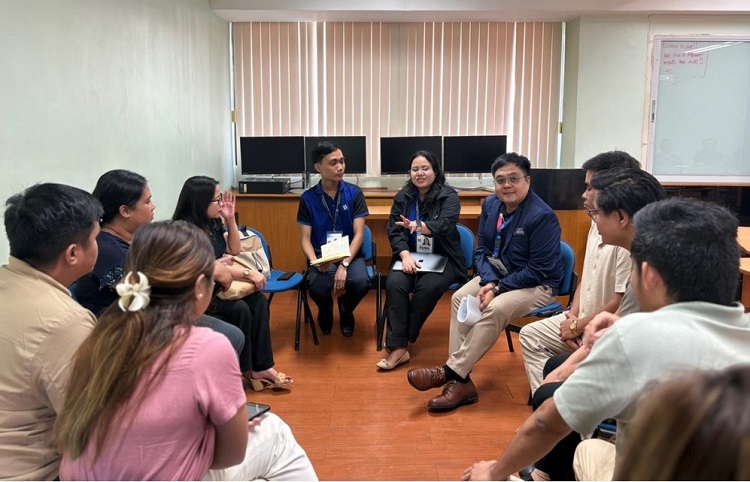
The roundtable discussion proper divided participants into academe–government and private sector groups. The academe–government group, led by Ms Rivera, included representatives from DOST Region X, DICT, CLENRO, USTP Alubijid, Project Lunhaw, and XU-MAERS. The private sector group, led by Engr Vallente included representatives from CEPALCO and First Gen Corporation.
Each group examined motivations, policy contexts, governance roles, current measures, benefits, and stakeholder engagement. Their discussions generated comparative insights on how low-carbon initiatives operate across sectors and interact with local governance structures, directly addressing the study’s core research questions.
Toward Evidence-Based Climate Policy
The forum concluded with a synthesis by Mr Jhon Louie Sabal, who stressed the importance of coordinated action toward a net-zero future. He noted that the insights gathered would feed into an evidence-based policy paper aimed at strengthening climate governance in Cagayan de Oro.
The Low-Carbon Initiatives Roundtable Discussion functioned as both a platform for dialogue and a critical research exercise. By grounding policy recommendations in the experiences of local stakeholders, the Xavier Ateneo–PIDS collaboration seeks to advance a more coherent, inclusive, and sustainable low-carbon future for the city and beyond.
Photos by: Adlai Manuel Ong