Xavier University–Ateneo de Cagayan (XU–AdC) hosted Workshops 2 and 3 of the Policy Leadership Workshop Series: Strengthening Cultural MSMEs through Inclusive and Gender-Sensitive Policy Innovation on 11 to 12 December at the De Luxe Hotel, convening policymakers, MSME support organizations, academics, and development partners to advance inclusive and gender-responsive approaches to MSME development.
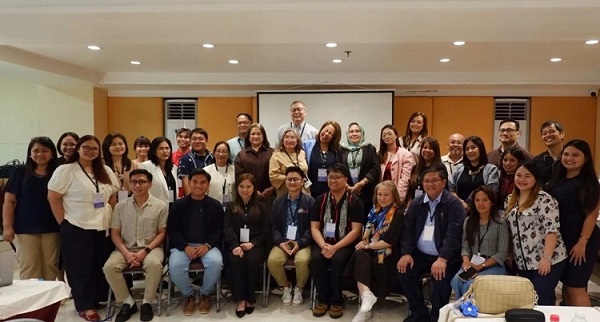
The Policy Leadership Workshop Series is organized by the Philippine Institute for Development Studies (PIDS) and the Philippine APEC Study Center Network (PASCN), in partnership with the Asia Pacific Foundation of Canada (APF Canada) through the APEC–Canada Growing Business Partnership, with funding support from the Government of Canada. The initiative is supported by Central Luzon State University (CLSU) and Xavier University–Ateneo de Cagayan, highlighting the role of academic institutions in fostering inclusive and locally grounded policy engagement.
Micro, small, and medium enterprises (MSMEs) are widely recognized as key drivers of inclusive growth, innovation, and resilience in the Philippine economy. Within this sector, women-led cultural MSMEs play a crucial role in preserving intangible cultural heritage while generating local employment and livelihoods. Despite their contributions, these enterprises continue to face challenges related to policy access, financing, and digital infrastructure—constraints the workshop series seeks to address through capacity building and collaborative policy design.
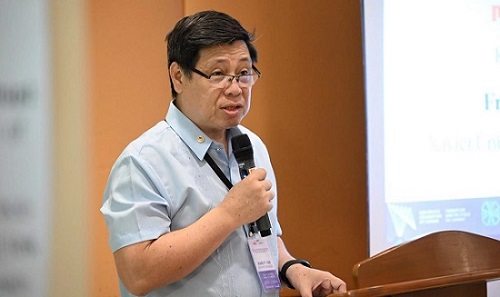
Workshop 2, titled “Breaking Barriers: Shaping Systems for Inclusive Growth,” focused on aligning institutions and policy systems with inclusive development objectives. In his opening remarks, Engr Dexter S Lo, Vice President for Social Development of XU–AdC, emphasized the importance of culture, women’s empowerment, and digitalization in enabling MSME growth. Fr Mars P Tan, SJ, President of XU–AdC, underscored the vital role of MSMEs in the Philippine economy, particularly in Northern Mindanao and Cagayan de Oro City, and highlighted the university’s programs that support inclusive and sustainable MSME development.
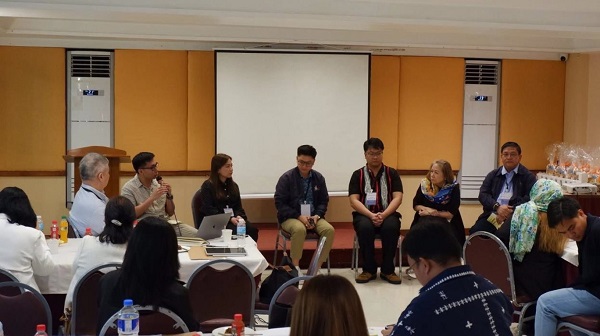
Participants took part in interactive learning sessions that mapped the MSME policy ecosystem and identified opportunities for gender-responsive policy reform. Activities included a World Café exploring MSME archetypes and The Policy Compass, which guided participants in developing vision boards for micro-, meso-, and macro-level policy interventions. A study tour of the Xavier University Museum, Bestfriend Goodies Facility, and Ginama provided firsthand insights into the operations, innovations, and challenges of local cultural enterprises.
Workshop 3, titled “From Barriers to Breakthroughs: Equipping Inclusive Changemakers for Cultural MSMEs,” shifted the focus toward practical capacity building, particularly in digital innovation and financial literacy. Participants engaged in a Bingo Metaverse activity to explore accessible digital tools for MSMEs and concluded the workshop with a Policy Pitch session, where teams co- developed actionable and regionally grounded policy prototypes aimed at strengthening the resilience and sustainability of women-led cultural enterprises.
The workshops were facilitated by Dr Karenina Romualdo, Vice President for Business Affairs of Central Luzon State University, and Mr Jhon Louie B Sabal, Chairperson of the Department of Economics of Xavier University–Ateneo de Cagayan and the university’s representative to the Philippine APEC Study Center Network. Support for the series was provided by Dr Francis Mark A Quimba, Director of PASCN, and Ms Jean Clarisse T Carlos, Lead Coordinator of the workshop series.
In his closing remarks, Dr Philip Arnold P Tuaño, President of PIDS, acknowledged the collaboration among PIDS, PASCN, CLSU, XU–AdC, and APF Canada, emphasizing that strong multi-institutional partnerships are essential to advancing inclusive and sustainable development for cultural MSMEs.
The Cagayan de Oro workshops form part of a three-part national series, which began in October 2025 at PIDS in Quezon City and will conclude in January 2026 at Central Luzon State University in Nueva Ecija. Together, the sessions serve as a policy innovation pathway—from understanding lived realities and structural barriers, to building practical skills, and ultimately to co-creating policy commitments and national recommendations that support women-led cultural MSMEs across the Philippines.