By Victoria Melissa C Pulido, Service- Learning Formator
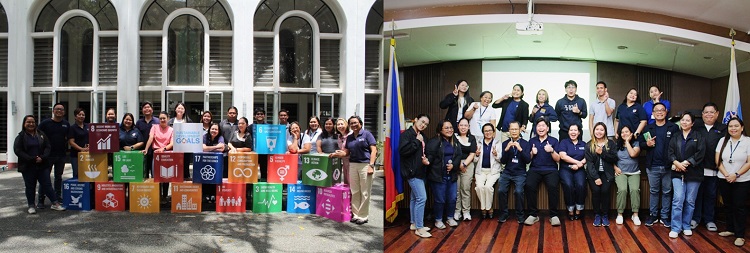
As the global community races toward the 2030 deadline for the United Nations Sustainable Development Goals (SDGs), Xavier University–Ateneo de Cagayan has transformed its campus into a hub of discernment and localized action. Celebrating Social Development (SD) Week 2026, the university anchored its festivities on the theme, "PAGTUBAG SA HAGIT SA PANAHON: Nurturing Legacies and Serving Communities."
This year’s celebration is a response to the "Call of the Times." By weaving the global urgency of the 2030 Agenda into the Ignatian value of a "faith that does justice," Xavier Ateneo is proving that the fight against corruption, marginalization, and climate change is a singular struggle for human dignity. Integrated with the XU Centennial Celebration, SD Week serves as a reminder that the university's present direction is built upon a century of social development work.
Keynote: From Global Targets to Lived Commitments
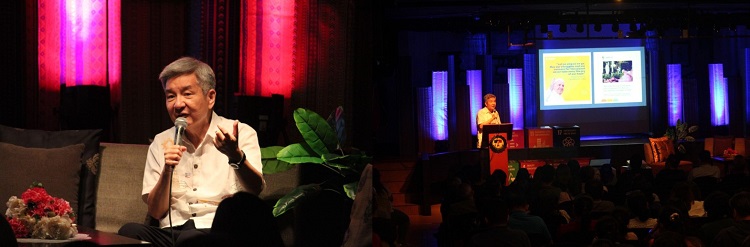
The week commenced with a recalibration of the university’s compass, featuring a keynote address by Ateneo de Manila University President Fr Roberto “Bobby” C Yap, SJ. He provided a strategic roadmap for higher education in the "Post-2030" era, identifying four essential pillars: Impactful Research, Quality Teaching, Community Extension, and Framework Leadership.
Fr Yap issued a stirring “wake-up call,” warning that the world remains far from achieving its 2030 targets and emphasizing that true sustainability must flow from leadership into a “shared sustainability culture.” Xavier University President Fr Mars P Tan, SJ, echoed this, acknowledging the need for a more integrated, “whole-of-university” strategy to serve our common home.
Mainstreaming SDGs and Laudato Si’ Goals
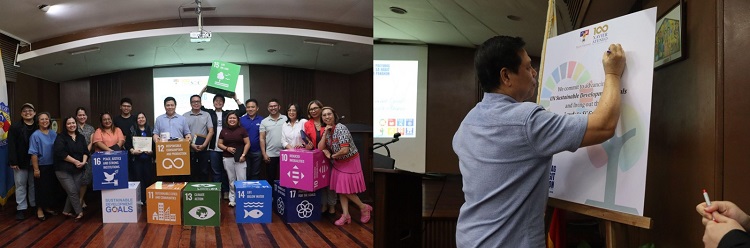
An outcome of the week was the formal effort to mainstream the UN Sustainable Development Goals (SDGs) and the Laudato Si’ Goals (LSGs) into the university’s institutional fabric. This strategic alignment moves Xavier Ateneo toward a "whole-of-university" approach, where academic research, teaching, and student advocacy are intentionally mapped against specific global targets. To elevate its quality management and institutional accountability, the university is adopting a data-driven framework that consciously translates local efforts into global perspectives. This transition involves embedding these goals into the core planning processes of all campus units to ensure sustainability is a fundamental management priority. Practical steps include the "tagging" of activities within project proposals, published research, and budgeting to systematically track institutional alignment.
Furthermore, by utilizing frameworks like the Global Reporting Initiative (GRI), the university is moving toward formal sustainability reporting. This serves as a tool for data-informed management, allowing administrators to track contributions to sustainable development while identifying specific areas for growth. Ultimately, by aligning quality assurance with these goals, Xavier Ateneo seeks not merely to boost global rankings but to pursue an authentic sustainability rooted in its Jesuit mission and a collective resolve for responsible stewardship
Dismantling Unjust Structures: Anti-Corruption and BARUGAN
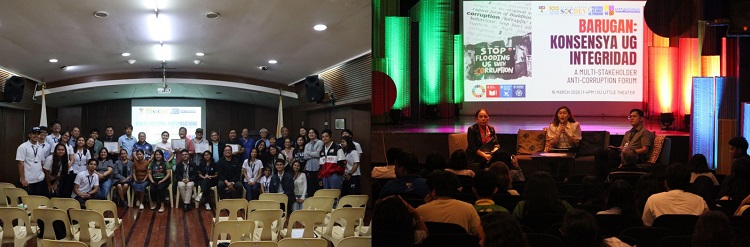
In alignment with the Ignatian call to dismantle "unjust structures," the Multi-Sectoral Conversations on Anti-Corruption gathered the academe, government bodies, and civil society to confront the systemic roots of corruption and the moral imperative of transparency. The conversation was followed by a forum titled Barugan: Konsensiya ug Integridad, where former COA Commissioner Heidi Mendoza turned policy into a personal call to advocate for integrity in public service.
Reflecting on her 2025 senatorial run, Mendoza challenged the audience’s frustration over the nation’s bleak struggle by asking, “Instead of asking me if I am going to run [in 2028], it should be me asking if you are ready to campaign for a different kind of politics.” The dialogue was bolstered by good governance advocates Robert dela Serna and Mia Baconga (CWGG), who introduced initiatives for citizens to officially record government incompetence to demand accountability.
The Summits: Showcasing Community-Driven Solutions
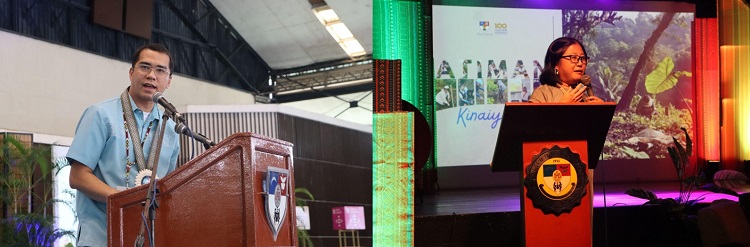
The heart of the week’s showcase featured two major summits demonstrating how the classroom meets the frontiers of social change. The Service-Learning Summit highlighted projects organized into SDG clusters, ranging from Health (SDG 3) initiatives like dengue vector control and life support training to Livelihood (SDGs 1-9) projects focused on enterprise development and cooperative assessments. VPSD Engr Dexter S Lo noted that these initiatives bridge classroom knowledge with community realities, while SLP Director Ms Gail P de la Rita emphasized the importance of collective problem-solving.
Complementing this, the SIAP Summit spotlighted student-led advocacies in indigenous rights and environmental protection. The summit emphasized that social involvement is a transformative avenue for every student, fostering leadership through active engagement in advocacy and public policy lobbying.
Laag Konsulta: Solidarity in the Peripheries
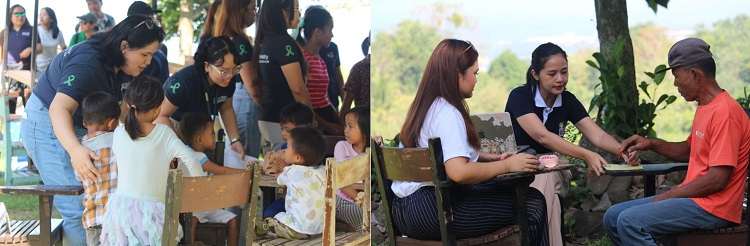
On 5 March 2026, the engagement moved to the El Gaucho Campus in Upper Puerto. Laag Konsulta brought medical, legal, and psychosocial expertise directly to about 100 residents of a remote community central to XU’s housing partnership with the city.
Volunteers from the Xavier Center for Legal Assistance (XUCLA), Xavier Center for Global Health, Xavier Center for Mental Health and Research, and the University’s Food Technology program provided legal and medical consultations, psycho-social activities, and nutritional support. Beyond the professional aid, residents expressed that the most significant impact was being heard and recognized as partners in the university's mission.
Tabuan Festival: A Marketplace of Culture and Advocacy
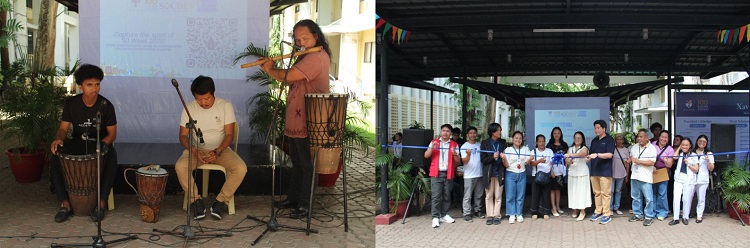
The university’s Magis Walkway transformed into a marketplace through the Tabuan Fest. The festival featured a rich tapestry of indigenous artistry and agricultural resilience, from the tribal accessories and soil paintings of Dire Husi Initiatives, Inc, Samdhana Institute, and Xavier Science Foundation, to the premium coffee, cacao, and local delicacies provided by DTI-10 RAPID Growth, LGU Malitbog, LGU Cagayan de Oro, and LGU Alubijid.
Sustainable livelihoods and urban innovation were equally on display through the merchandise of XU Night School-ALS learners, the fresh produce of Talongan Homeowners Association, the regional microenterprises of DSWD-10, and the creative recycled products of SBM BA 20 students, proving that at the heart of Xavier Ateneo’s mission is a commitment to empowering partner communities to lead, create, and thrive.
Reflection Session: Collective Discernment
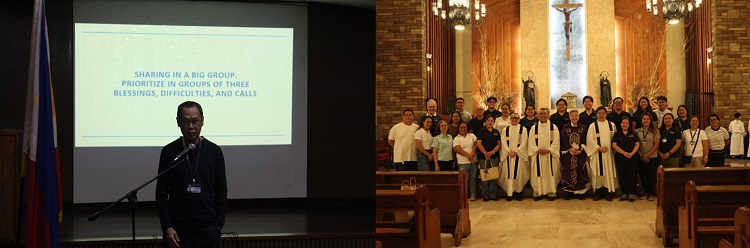
To cap off the week’s activities, the SD Cluster held its annual SD Week Reflection Session, where Fr Antonio “Tony” F Moreno, SJ, led the team through an Ignatian Examen. This spiritual exercise allowed the cluster to discern the fruits of the week and listen to the call of the mission moving forward.
Ultimately, the celebration achieved its goal of shifting the community from merely observing global goals to actively localizing them. As Xavier Ateneo marches toward its centennial, SD Week 2026 stands as a testament to the dual power of social engagement and student leadership, a commitment to a future where social development is a lived expression of our shared humanity and the stewardship of our common home.