By: Therese Rhea Rose B Vallente
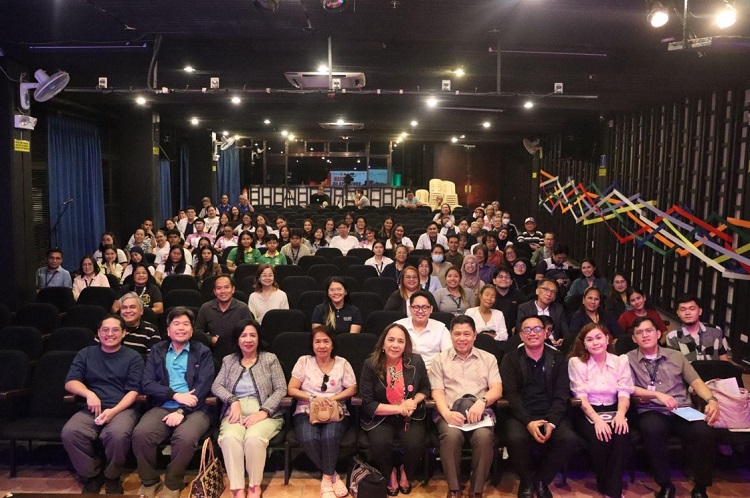
On 16 March 2026, the Xavier University Little Theater became more than a venue—it became a space of dialogue and discernment. In the spirit of the Social Development Week 2026, the forum “Barugan: Konsensiya ug Integridad” A Multi-stakeholder Anti-Corruption Forum gathered students, educators, civil society actors, and governance advocates to confront a pressing question: How do we respond—personally and collectively—to the enduring challenge of corruption?
Organized by the Social Development Cluster through its Social Involvement and Advocacy Program (SIAP) and the XU Center for Legal Assistance (XUCLA), the forum carried the theme “Pagtubag sa Hagit sa Panahon: Nurturing Legacies and Serving Communities.” It framed corruption not merely as a legal or administrative issue, but as a moral crisis that erodes human dignity, distorts justice, and weakens democratic life.
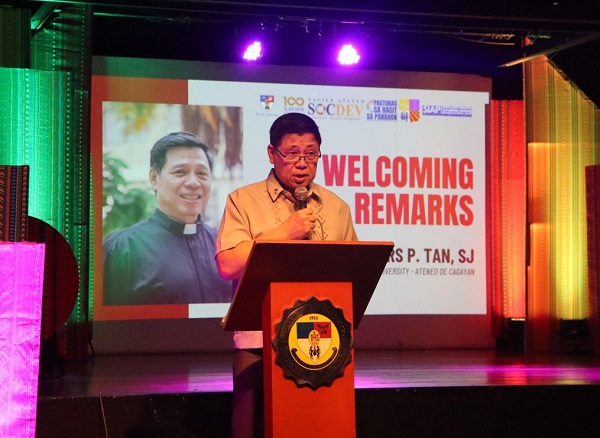
At the heart of the discussion was a call deeply rooted in the Jesuit mission. In his opening remarks, University President Fr Mars P Tan, SJ, grounded the dialogue in the university’s identity: Veritas Liberabit Vos—the truth shall set you free. He emphasized that for Xavier Ateneo, education must transcend intellectual formation to form the conscience truly. “Integrity, transparency, and accountability are not optional virtues; they are necessary imperatives,” he stated, underscoring that corruption disproportionately harms the poor by depriving them of essential resources and opportunities. Fr Mars challenged participants to move beyond mere reflection toward action, stressing that meaningful dialogue must lead to concrete commitments that advance ethical governance and social transformation.
The Forum highlighted the presentation by Keynote Speaker Heidi Reyes Lloce-Mendoza, former Commission on Audit (COA) Commissioner and former Under-Secretary-General of the United Nations Office of Internal Oversight Services, who delivered a deeply personal, narrative-driven address. Departing from purely technical discussions, Mendoza traced her understanding of integrity to formative childhood experiences. She recalled a simple practice in their home—a shared tin can of coins—where taking more than one’s share meant depriving a sibling. In that ordinary moment, she said, lay an enduring lesson in justice.
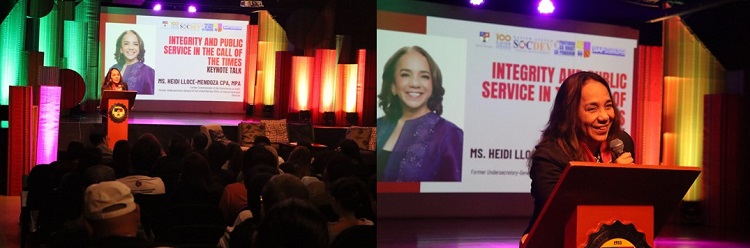
Guided by her father’s principle to never take what is not rightfully yours, Mendoza carried this moral clarity into public service. Starting from the lowest rank in government, she held on to a single standard: to leave with “untainted hands.” Yet she acknowledged the difficulty of this path. She emphasized, “The hardest thing is not to stand, but to remain standing when many have already chosen to sit.” Mendoza recounted her work in government auditing, including efforts to stop anomalous transactions, as well as her decision to run for public office without political machinery or financial backing. Her experiences revealed both the risks and the burden of integrity, especially when confronted with a system where corruption can appear normalized. At the same time, she emphasized that integrity is not measured by success or victory, but by fidelity to what is right.
Moving from reflection to praxis, the forum’s sectoral responses highlighted concrete pathways for citizen engagement. Governance advocate Robert dela Serna introduced a proposed digital platform, the radari app designed to enable citizen-led monitoring of government spending and initiatives. The initiative encourages the public to move beyond online outrage and toward structured reporting and accountability. Meanwhile, Mia Baconga of Citizens’ Watch for Good Governance (CWGG) underscored the importance of participatory governance. Through volunteerism and active involvement in accountability mechanisms, citizens can directly influence policy, monitor implementation, and help ensure transparency at the grassroots level. Both reactors reinforced a shared message: the fight against corruption is not confined to institutions, rather it demands informed, engaged, and responsible citizenship.
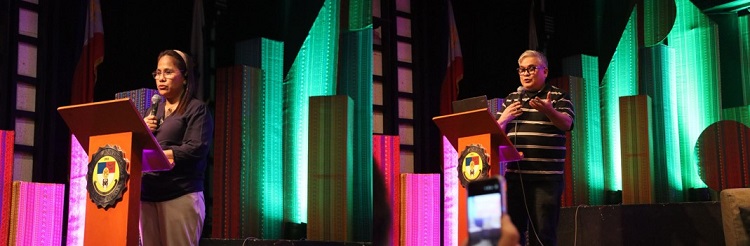
An open forum followed where the audience were able to engage in discussion. Mendoza posed a pointed challenge to the audience: in the face of recurring corruption controversies, are Filipinos willing to choose leaders based on integrity rather than electability? “Hindi ba kaya ng mamayang Pilipino na magtulak ng tama at kinakailangang kandidato?” she asked. She reframed political participation as a shared responsibility, urging citizens not only to evaluate candidates but to actively support and campaign for a different kind of politics, one grounded in principle rather than patronage.
Mendoza also emphasized the role of families in shaping moral conscience, noting that integrity begins in the home and is reinforced through everyday choices. “For ordinary citizens”, she added, “living with integrity can be as practical as staying informed, monitoring governance, and holding institutions accountable”. She further warned of the risks facing the younger generation, particularly youth leaders, who may inherit corrupt practices if not guided by strong ethical formation, highlighting the critical role of academic institutions in forming conscience
Expanding the conversation, a Call to Action was delivered by Director of the XU Center for Legal Assistance Atty Ernesto B Neri, who situated corruption within its personal, structural, and historical dimensions. He pointed out that corruption persists not only because of individual failure, but also due to systemic conditions, such as concentrated power, weak accountability mechanisms, and gaps in the rule of law. Drawing from governance frameworks, Neri explained that corruption often thrives where monopoly and discretion are high, and transparency is low. Addressing it, therefore, requires more than individual virtue; it demands both moral integrity and sustained institutional reform. Despite these challenges, he offered cautious hope, noting that meaningful change is possible through sustained civic engagement—especially among the youth—whose collective action can gradually reshape systems over time.
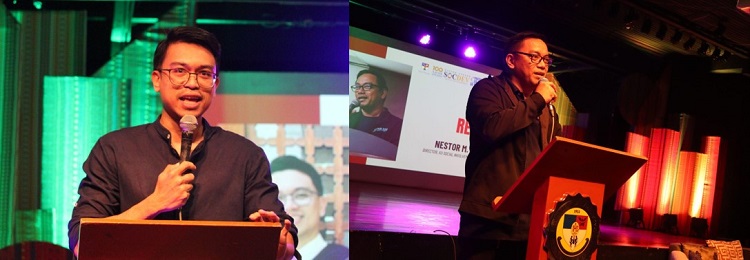
The forum concluded with a Closing Remarks delivered by Director for the Social Involvement and Advocacy Program Nestor M Banuag, urging participants to carry forward the insights gained into their communities, professions, and daily decisions. He called on the participants to continue to stand—firm in conscience and integrity—and to serve with courage, accountability, and purpose.
“Barugan,” a Visayan term meaning to stand firm, captures the heart of the initiative. Within the Jesuit tradition, to stand is not merely to resist but to discern, to act, and to serve. As the conversations ended, one message remained clear: the fight against corruption is not only institutional, it is deeply personal. It begins in conscience, is strengthened in community, and is sustained through action. In a time marked by moral ambiguity and systemic challenges, Barugan calls on all to stand firmly, courageously, and collectively for truth, integrity, and the common good.