Xavier University – Ateneo de Cagayan, through Mr Jhon Louie B Sabal, Assistant Professor of the Department of Economics, participated as a panel reactor in the national forum “She Creates, She Connects: Reimagining Women’s Empowerment in the Tourism and Creative Industries” on 26 March 2026 in celebration of National Women’s Month.
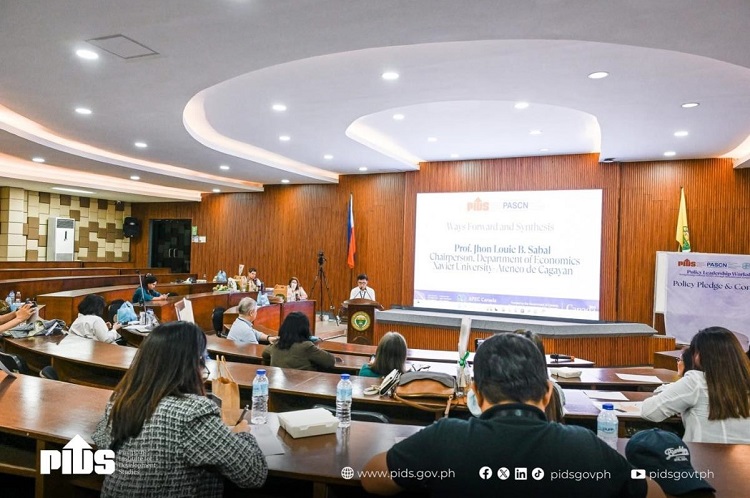
The forum, co-organized by the Asian Institute of Management – Dr Andrew L Tan Center for Tourism, Philippine Institute for Development Studies, and the Philippine APEC Study Center Network, convened leaders from government, industry, and academia to examine how tourism and creative industries can serve as platforms for women’s empowerment.
Serving as a panel reactor, Sabal delivered a synthesis grounded in economic analysis and field-based research, emphasizing that women are not only central to household welfare but are key drivers of economic growth. He highlighted evidence showing that women’s income generates strong multiplier effects, particularly in education, health, and community development—strengthening human capital and long-term resilience.
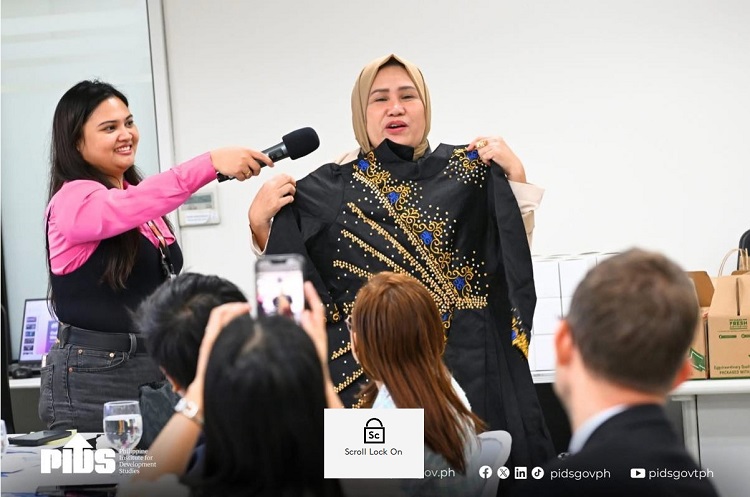
Anchoring his insights in local development work, Sabal drew from his research in Don Carlos, Bukidnon, where women play a vital role in emerging tourism and creative sectors. He noted that women lead local enterprises, sustain cultural production, and shape community-based tourism experiences, making their participation essential to unlocking the full economic potential of rural destinations. In this context, he stressed that supporting women is not only a matter of equity, but a strategic economic imperative.
A key highlight of Sabal’s intervention was his discussion of a recent policy study conducted with the Government of Canada, Philippine Institute for Development Studies, Central Luzon University and the Xavier University. He underscored that the findings were the result of collaborative work with co-authors Jean Clarisse T Carlos, Francis Mark A Quimba,
and Karenina B. Romualdo—whose contributions were central in developing the evidence base and policy insights presented during the forum.
Drawing from this joint research, the study identified persistent challenges faced by women- led cultural MSMEs, including limited access to finance and digital tools, fragmented institutional support systems, policy misalignment, and barriers to formalization and scaling. It also highlighted the digital divide as a major constraint, limiting women entrepreneurs’ ability to fully participate in expanding markets.
To address these gaps, the research proposes a multi-level policy approach: strengthening legal and market protections at the macro level; improving coordination among government agencies, local governments, universities, and industry groups at the meso level; and enhancing enterprise-level capabilities through financial literacy, digital skills, and adaptive strategies at the micro level.
Sabal emphasized that while the Philippines has a strong policy framework—including laws supporting MSMEs, women, and creative industries—the key challenge lies in coordinated, gender-responsive implementation that translates these policies into real and accessible support systems.
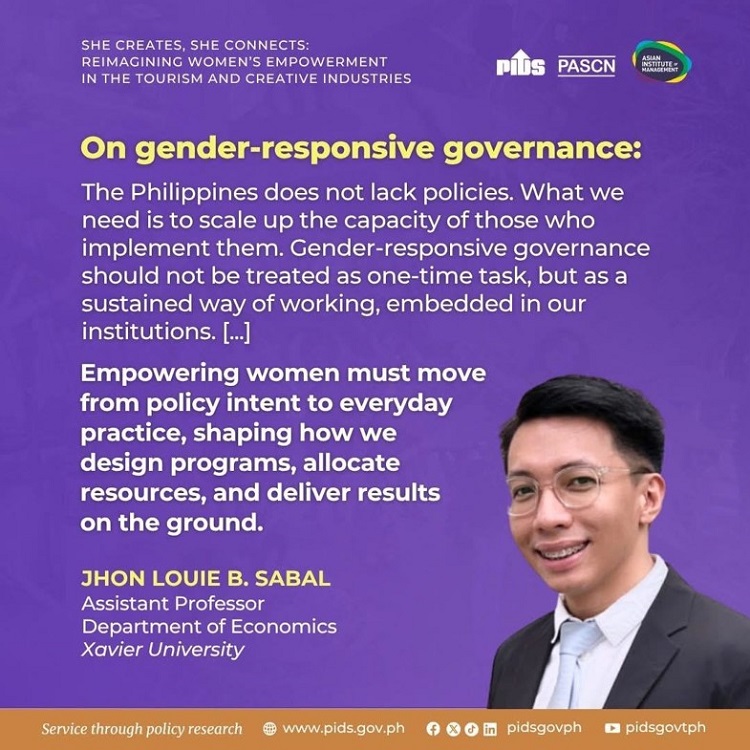
He concluded with a call for shared responsibility, noting that empowering women requires the active engagement of men, institutions, and policymakers alike.
“Investing in women is investing in the economy,” Sabal underscored, emphasizing that tourism, culture, and entrepreneurship can drive inclusive growth only when women are fully supported to participate, lead, and thrive.
Through this engagement, Xavier University reaffirms its commitment to advancing evidence- based policy, inclusive development, and meaningful public discourse—highlighting the vital role of collaboration in producing research that informs action.