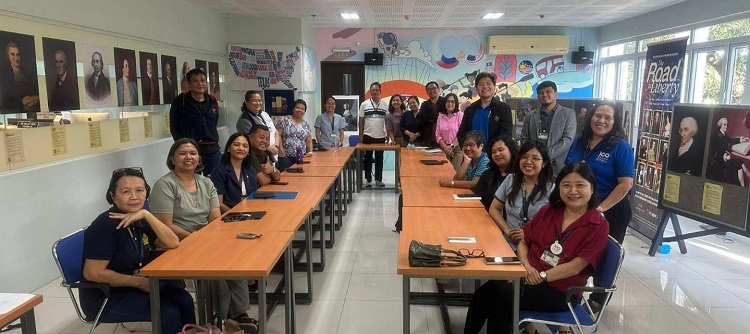
Participants of the Round Table Discussion on Green Spaces Guidelines
held at the American Corner Lecture Space, XU Main Campus
In line with Xavier University’s commitment to sustainability and integral ecology, a Round Table Discussion (RTD) on proposed Green Spaces Guidelines was held on 25 March 2026 at the American Corner Lecture Space, New Library Building, of the XU Main Campus. The activity brought together sustainability champions from the fields of agriculture, biology, and engineering, as well as members of the Atiman Kinaiyahan, Laudato Si’, and Green Campus Committees. This initiative reinforced the University’s continuing efforts towards greener and more sustainable campuses.
The participants were welcomed by the Campus of the Future (CoF) Development Office Project Director and Atiman Kinaiyahan Committee Chair Engr Lennie K Ong, who outlined the program objectives: to present the outline of the Green Spaces Guidelines, gather stakeholder inputs, and consolidate recommendations for finalization. The session, facilitated by XU’s Social Involvement and Advocacy Program (SIAP) Director Mr Nestor Banuag, provided a platform for open dialogue where participants actively engaged in discussions on campus planning, green space maintenance and expansion, biodiversity conservation, and sustainability integration in daily operations. Their contributions highlighted the importance of collaboration in creating a more resilient, climate-responsive, and environmentally responsible campus environment.
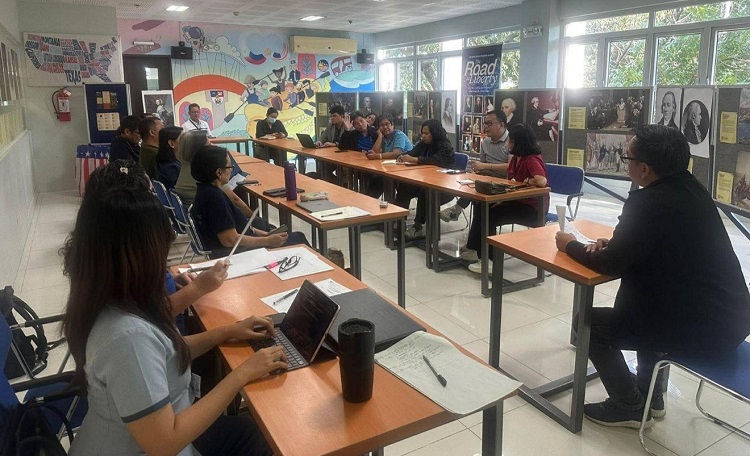
Stakeholders and sustainability champions actively shared insights
and recommendations during the open forum
Participants emphasized the need for a more comprehensive approach to green space development, including the possible creation of campus-wide Green Space Master Plans. They also highlighted the importance of clarifying the nature of the proposed document and defining clear roles, timelines, and responsible offices. The session concluded with CoF Development Office Associate Project Director Dr Ann Charlette Cabana, providing a synthesis of action points and outlining the way forward.
Key recommendations included identifying priority areas for biodiversity conservation, strengthening coordination among offices, consolidating existing environmental research, and exploring sustainable funding sources through partnerships and income-generating initiatives.
The activity underscored Xavier University’s strong commitment to environmental stewardship and participatory governance, highlighting the vital role of the University community in shaping a greener, more resilient, and sustainable campus.