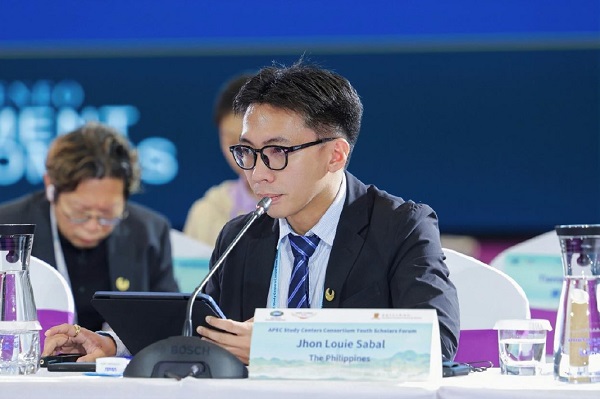
Mr Sabal during his plenary talk titled “Economic Integration at the Peripheries” at the Economic Integration Session of the
APEC Youth Scholars Forum in Shenzhen, China.
XU Assistant Professor of Economics Mr Jhon Louie B Sabal served as one of the two Philippine representatives to the Asia-Pacific Economic Cooperation (APEC) Study Centers Consortium (ASCC) Youth Scholars Forum held from 7 to 8 May 2026 at The Chinese University of Hong Kong, Shenzhen, China.
His participation was made possible through his nomination by the Philippine APEC Study Center Network (PASCN) and the Philippine Institute for Development Studies (PIDS), in recognition of his research and policy engagement on regional development and economic integration.
The Asia-Pacific Economic Cooperation (APEC) is one of the world’s largest regional economic groupings, comprising 21 member economies and accounting for approximately 60 percent of global GDP, around half of global trade, and nearly three billion people. It serves as a key platform for advancing trade liberalization, economic cooperation, and inclusive growth across the Asia-Pacific region.
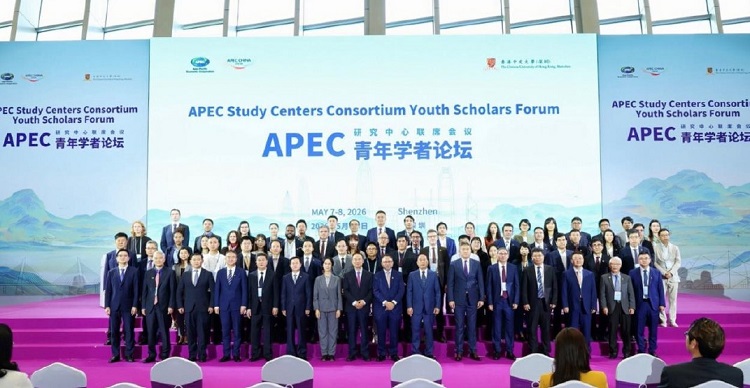
The ASCC Youth Scholars Forum, Mr Sabal in third row, was attended by over 13 representatives from APEC member economies and
was hosted by China through The Chinese University of Hong Kong, Shenzhen.
China, as the host economy for APEC 2026, organized the Youth Scholars Forum as part of the “APEC China 2026” series of parallel events. The forum reflects APEC’s continuing effort to strengthen academic exchange and cultivate the next generation of researchers and policy thinkers focused on regional integration, innovation, and sustainable development. The event was co-hosted by The Chinese University of Hong Kong, Shenzhen in collaboration with the APEC Study Center of Nankai University (Tianjin, China), under the theme “Forging New Drivers for Development: Youth, Innovation, and a Sustainable Future,” anchored on the broader APEC 2026 vision of “Gathering in Shenzhen for a Prosperous Asia-Pacific Region.”
During the Economic Integration Plenary Session, Mr Sabal’s participation and presentation were featured in China Daily Asia (see full article: https://www.chinadailyasia.com/hk/article/633161), which highlighted his discussion on uneven patterns of economic integration within countries and his focus on Mindanao as a case study of regional disparity and inclusion in development. The coverage underscored his emphasis on how economic integration should be assessed not only at the national or global level, but also in terms of how its benefits reach peripheral and less-developed regions.
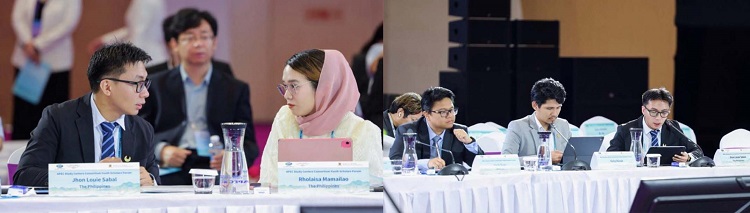
Mr Sabal during his plenary talk, presided over by Dr Hong Tu, Deputy Director of the APEC
Study Center of Nankai University and Deputy Dean of the China APEC Academy.
In his presentation titled “Economic Integration at the Peripheries,” Mr Sabal examined how the benefits of integration are unevenly distributed within countries, using the Philippines as a case study.
He noted that while the Philippines has experienced steady macroeconomic growth—averaging 5 to 7 percent in recent years and reaching an economy size of around 460 billion US dollars— the gains of development remain spatially concentrated. Economic activity is heavily centered in Luzon, which accounts for nearly 70 percent of national GDP, while Mindanao and the Visayas contribute significantly less despite their population and resource bases.
Mr Sabal emphasized that Mindanao plays a crucial but often underrecognized role in the national economy. Contributing around 16 to 17 percent of GDP and home to a large and diverse population, the region continues to face structural development challenges, including infrastructure gaps, geographic isolation from economic centers, uneven connectivity, and historical perceptions of neglect. Poverty incidence also remains higher in Mindanao compared to Luzon, underscoring persistent development disparities.
Beyond economic indicators, he also highlighted Mindanao’s distinct multicultural identity, where Lumad, Muslim, and Christian communities coexist, and noted that development within the island itself is also uneven across subregions.
In his presentation, Mr Sabal stressed that while economic integration—both within APEC and within countries—is grounded in comparative advantage and trade openness, its success should not only be measured by aggregate growth or trade expansion. A more meaningful measure, he argued, is whether all regions are able to participate in and benefit from the process of integration.
“The real question is whether regions within countries are able to participate meaningfully in that process,” he noted during his plenary address.
He further emphasized that concerns about uneven integration should not be dismissed, but instead used as a basis for improving policy design so that the benefits of growth are more broadly distributed, especially to regions at the periphery.
Looking ahead, Mr Sabal highlighted key development priorities for the Philippines, including strengthening science and engineering education, improving digital infrastructure, supporting the digitalization of small enterprises, and enhancing coordination between education systems, labor markets, and governance structures.
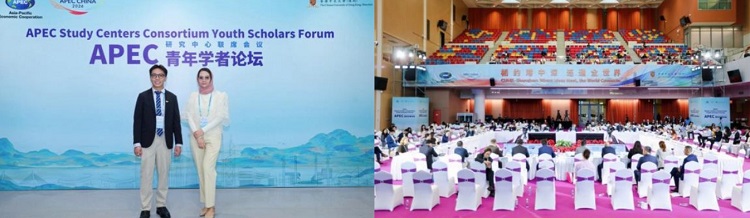
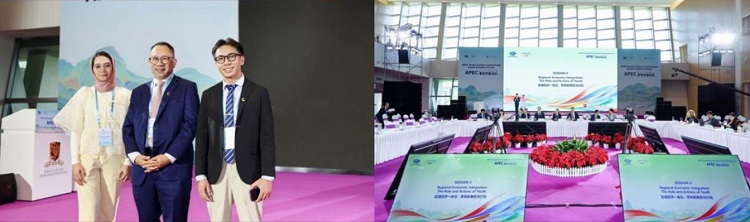
(Left Photo) Mr Sabal and fellow Philippine representative Ms Rholaisa Mamailao with Mr. Eduardo Pedrosa, Executive Director of APEC.
(Right Photo) Mr Sabal’s presentation was displayed on the screen during his plenary talk.
The forum also included site visits and industry-academia exchanges showcasing Shenzhen’s globally recognized innovation ecosystem, reflecting China’s role as APEC 2026 host economy and its broader experience in economic transformation, openness, and technological advancement.
Mr Sabal’s participation highlights continued engagement in international policy discourse within the APEC community, particularly on issues of regional development, inclusive growth, and the future of economic integration in the Asia-Pacific.
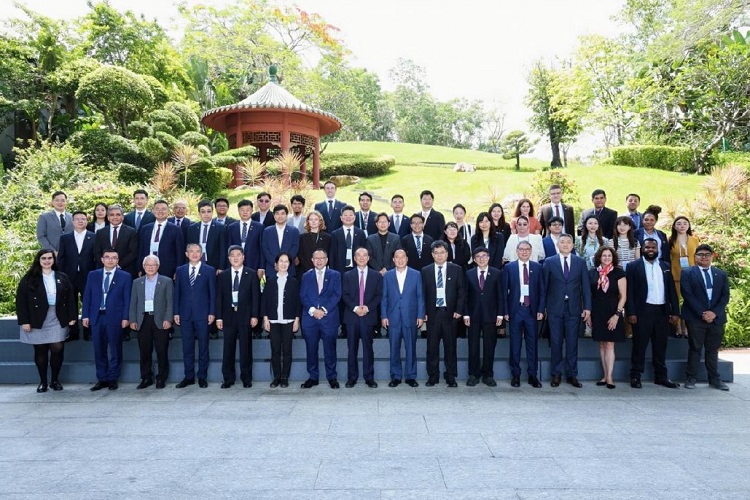
Mr Sabal (second row) posed alongside participants during an exclusive lunch hosted by officials from China, APEC, and
The Chinese University of Hong Kong, Shenzhen at the administration building in Shenzhen, China.