By: Gene Axel Galarrita
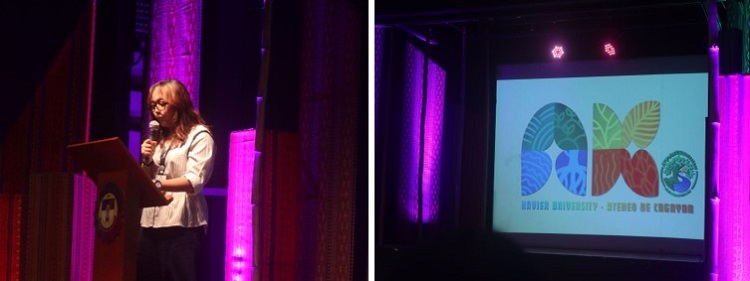
During the 2nd Annual Culminating Activity of the Atiman Kinaiyahan Tree Growing Program on 13 May 2026, at the Little Theater, members of the Xavier Ateneo community witnessed the unveiling of the program's new official logo that symbolizes environmental stewardship and also highlights the power of individual responsibility. Behind the design is Kiera Dominique L Dacalos, a freshman Accountancy student enrolled under NSTP ACA 2.1.
Addressing faculty members, administrators, students, volunteers, and partners gathered for the event, Dacalos shared the unexpected journey that led to the creation of the logo.
"At first, I didn't think much of it," she recalled, referring to the logo-making task assigned by NSTP facilitator Dennise Gonzales. "Days went by, and I found myself at 3 a.m. cramming [on] the logo that I promised to finish a day before. Although it was rushed, I never imagined that the logo I made would be chosen for this special project."
For Dacalos, the selection of her design was a great opportunity for an Accountancy student with a passion for art to help create the visual identity of one of the University's key environmental initiatives.
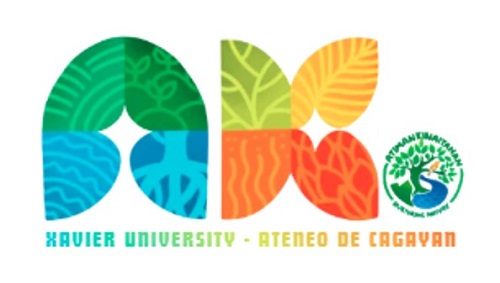
The newly launched logo centers on the letters "AK," representing Atiman Kinaiyahan. Through vibrant colors and nature-inspired imagery, the design tells a story of environmental care, cultural heritage, and responsibility.
The letter "A" symbolizes the interconnectedness of land and water. Its upper section features green and blue hues representing the earth and aquatic ecosystems. Within its corners are visual narratives: mountain ranges and hills that reflect reforestation sites; a sapling being planted by students and volunteers; weaving-inspired patterns honoring the Indigenous Peoples of Mindanao and their relationship with nature; and mangrove roots symbolizing resilience and protection for vulnerable coastlines.
Meanwhile, the letter "K" illustrates the passage of time and the changing seasons. Leaves gradually shift from green to yellow, signifying nature's constant cycle of renewal. Beneath this imagery lies an underwater world of seaweeds and coral formations, emphasizing that environmental stewardship extends beyond forests and mountains to include marine ecosystems.
Yet the logo's most meaningful element emerges when the circular seal of the Atiman Kinaiyahan Program, a tree protecting a mountain and stream, is then incorporated into the design. With these alignments, the symbols transform the letters "AK" into the word "AKO" or simply, ("I").
"This is the heart of our story," Dacalos explained. "Environmental stewardship isn't a nameless, faceless task for someone else to do. It begins with AKO. I am the one who carries the seedling. I am the one who protects the watershed. I am the one responsible for the future."
The logo launch became one of the highlights of the Program’s 2nd Annual Culminating Activity, which celebrated a year of achievements under the Atiman Kinaiyahan Program.
The event, organized by NSTP AGC 2.1, opened with remarks from Engr Lennie K Ong, Project Director of the Campus of the Future Development Office and Chair of the Atiman Kinaiyahan Committee. Emphasizing that the program goes beyond simply planting trees, Ong reminded participants that "we don't just plant trees, we grow green spaces."
She reported that approximately 1,131 institutions and individuals, excluding NSTP students, volunteered in the program during Academic Year 2025–2026. Their collective efforts, on top of those by approximately 1,078 partners and volunteers in the year prior, contributed to the planting of 6,777 trees as of February 2026. Ong challenged the community to continue renewing its commitment to environmental action, describing every participant as a potential hero for nature.
A video presentation titled The Journey followed, showcasing the milestones, partnerships, and ecological initiatives undertaken throughout the academic year.
The program's keynote presentation, "Stewardship in Action," was delivered by Xavier University President Fr Mars P Tan, SJ. Drawing from biblical teachings, Fr Tan described stewardship as humanity's responsibility to care for God's creation. He highlighted the essential role of trees in preserving biodiversity, protecting soil, regulating climate, and ensuring cleaner air.
More importantly, he stressed that stewardship must be expressed through sustained community engagement and collective action.
"Caring for nature is both a moral and practical responsibility," he emphasized, encouraging participants to view environmental work as a lifelong commitment rather than a one-time activity.
The event also featured "Voices from the Field," where students Anya Marie Alamban and Hannah Andrea Cruz, together with staff member Ma Lucila Pacamo, shared personal experiences from their involvement in tree-growing and sustainability efforts. Their stories reflected the impact of individual participation and reinforced the program's central message of shared responsibility.
A Recognition and Awarding Ceremony honored individuals and partner organizations whose dedication significantly contributed to the University's sustainability initiatives.
Before concluding her presentation, Dacalos expressed gratitude to the people who helped bring the logo to life, including NSTP facilitators Ms Dennise Gonzales and Dr Charlette Cabana for their guidance and trust, Romm Darwaine Udarbe, a third-year BS Agriculture student who contributed to the concept of "AKO" and illustrated the circular "O" trademark, Thea Carine Dorothy Tagaro for helping prepare for the launch, and her NSTP blockmates for their encouragement and support.
As the event came to a close, one message resonated strongly throughout the Little Theater: environmental stewardship begins with personal responsibility.
Through a logo born from creativity, collaboration, and a sleepless night of determination, the Atiman Kinaiyahan Program has found a new symbol that reminds every Xavier Atenean that the mission to care for the environment remains incomplete without the "O", without AKO, without each one of us.