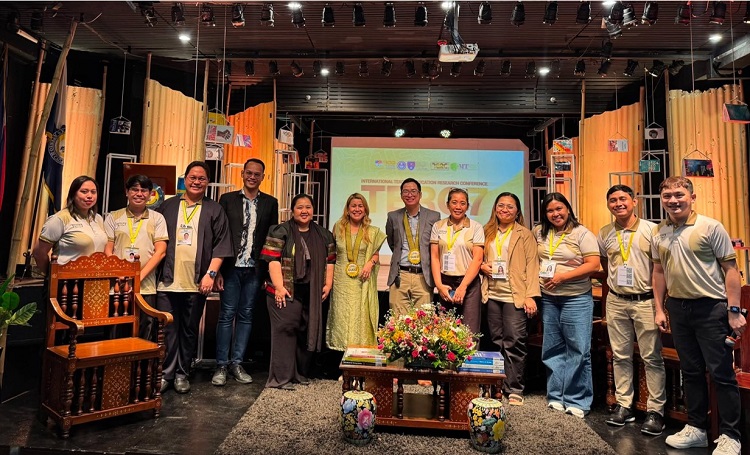
From 28 to 30 May 2026, Xavier University – Ateneo de Cagayan welcomed educators, researchers, school leaders, graduate students, and policymakers from across the Philippines and abroad for the 7th International Teacher Education Research Conference (TERC 7). The three-day conference served as a vital platform for critical reflection, evidence-based inquiry, and collaborative action at a moment when educational systems worldwide face both unprecedented challenges and promising opportunities for reform.
Anchored on the theme “From Reimagination to Transformative Results: Innovating with Integrity for a Sustainable Educational Future,” TERC 7 challenged participants to move beyond imagining educational possibilities and toward translating innovative ideas into meaningful, measurable impact — guided always by integrity, equity, and a commitment to the holistic development of every learner.
The conference opened with welcoming remarks from Xavier University President Fr Mars P Tan, SJ, and an opening message from Northern Bukidnon State College President Dr Christie Jean Villanueva-Ganiera — both of whom underscored the responsibility of teacher educators and researchers to generate knowledge that not only informs classroom practice, but influences policy and contributes to social transformation. Over three days, distinguished scholars and practitioners from the Philippines, Indonesia, China, and the United States engaged participants in conversations traversing education, technology, culture, leadership, and social justice.
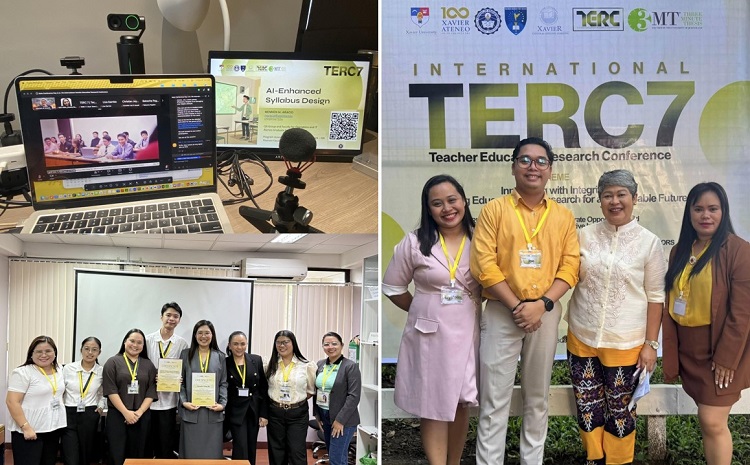
A thread woven consistently across all sessions was the imperative to keep innovation human-centered. Speakers called on educators to adopt emerging technologies — particularly artificial intelligence — not uncritically, but with careful attention to their ethical implications and their capacity to either bridge or widen existing gaps in educational access and quality.
Plenary sessions across the first two days ranged from equity-driven EFL education (Dr Arnel E Genzola, Jilin University-Lambton College, China) and cultural and critical literacy in the AI era (Dr Safitri Yosita Ratri, Universitas Negeri Yogyakarta, Indonesia) to AI-enabled faculty excellence (Prof Mennen Aracid, Ateneo Graduate School of Business) and the integration of civic involvemnt into strategic school leadership (Dr Ernesto D Grio, University of Asia and the Pacific). Parallel sessions expanded the conversation further, exploring ethical innovation in mathematics, Filipino leadership in American schools, indigenous wisdom and culturally responsive pedagogy, neurodivergent learner inclusion, and advancing equity through policy briefs.
Among the most compelling moments of the conference was the Day 2 roundtable discussion, “Rebuilding from the Ground Up: Award-Winning Teachers Confront EDCOM 2’s Verdict on the Philippine Education Crisis.” Moderated by Dr Hasima N Salic of Cagayan de Oro National High School-Junior High, the discussion brought together Metrobank Foundation Outstanding Filipino Teachers spanning three generations: Dr Mercelita Labial (2010, Capitol University), Dr Jovelyn G Delosa (2023, Northern Bukidnon State College), and Dr Angelo Mark P Walag (2025, University of Science and Technology of Southern Philippines). The exchange was candid, wide-ranging, and ultimately a reaffirmation that teachers are not merely subjects of reform — they are its most essential agents. No policy, however well-designed, can substitute for educators who are equipped, supported, and inspired to lead change from within their own classrooms and communities.
Running parallel throughout all three days, the paper presentation tracks gave researchers, graduate students, and classroom practitioners space to share evidence-based studies addressing contemporary educational concerns — reflecting both the particularity of local realities and the urgency of shared global challenges. Beyond disseminating findings, these sessions fostered mentorship, dialogue, and the cross-institutional collaboration that strengthens any scholarly community.
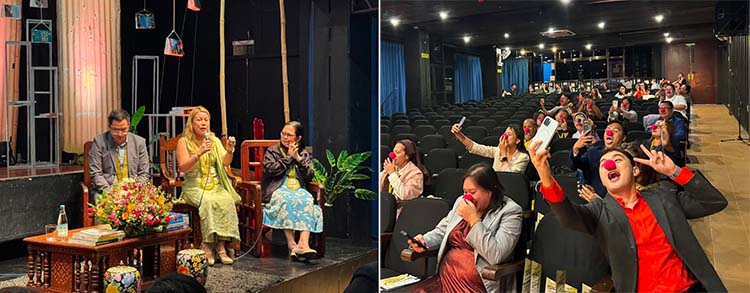
The final day opened with a reflection session on “Flourishing in the Workplace,” facilitated by Dr Dixon Q Yasay — motivational educator, certified Lego Serious Play practitioner, and
laughter yoga facilitator — an affirmation that sustainable transformation begins with the flourishing of educators themselves. The conference then culminated with the Live Three-Minute Thesis (3MT) Competition, celebrating emerging researchers who communicated complex ideas with clarity and public relevance, before an awarding ceremony honoring outstanding contributions across all sessions. Closing remarks were delivered by Dr Charity Rose A Pagara, Director of Graduate Studies and IDEA and Executive Coordinator of TERC 7, who charged participants to carry the spirit of the conference not as an event to remember, but as a commitment to act.
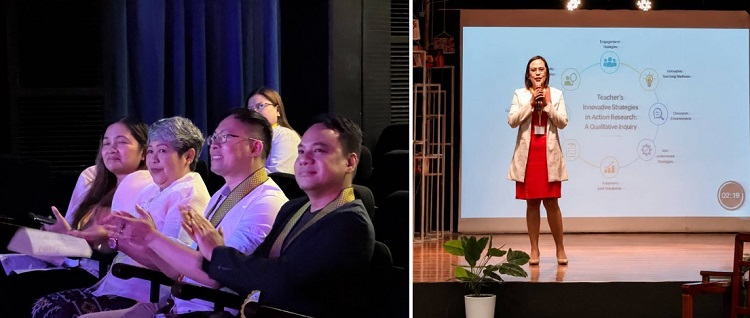
More than an academic gathering, TERC 7 was a collective affirmation of education’s enduring power to transform individuals, communities, and societies. It demonstrated that amid rapid technological change and persistent educational inequities, the future of education rests not on innovation alone, but on the values that guide it — integrity, inclusivity, and a steadfast orientation toward the common good. Participants returned to their institutions carrying not only new knowledge and professional connections, but a renewed sense of purpose: that transformative change begins when educators dare to reimagine possibilities — and work, together to make those possibilities real.