By Juanito R Oliveria II
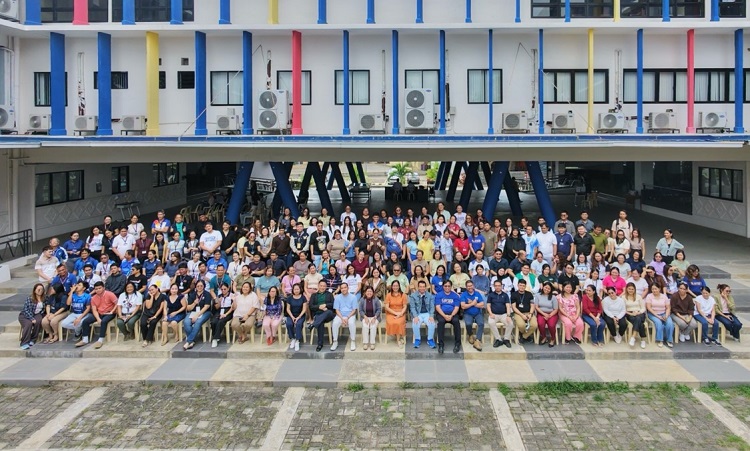
To strengthen classroom practices for varied and complex learner needs, Xavier University Basic Education held a two-day in-service training on Differentiated Instruction (DI) and Universal Design for Learning (UDL) from 21 to 22 May 2026 at the AVRs 1-4, XU Senior High School Pueblo Campus, with Dr Miguel Q Rapatan.
With 224 teaching faculty members and administrators, the BE-wide training focused on helping educators design flexible, responsive, and inclusive learning experiences while exploring practical ways to use AI tools in lesson preparation.
Understanding Learning Variability
Dr Rapatan introduced the idea of learning variability and described how learners encounter different barriers that affect their participation, understanding, and performance in the classroom, thus the need to use two key approaches, the Differentiated Instruction (DI) and the Universal Design for Learning (UDL).
Differentiated Instruction (DI) refers to the process of tailoring teaching methods, learning tasks, and classroom support according to learners’ readiness levels, interests, and needs. Universal Design for Learning, or UDL, focuses on creating flexible learning environments that allow more students to participate and succeed.
Dr Rapatan stressed the three guiding principles of UDL: engagement, which involves motivating learners; representation, which presents information in multiple ways; and action and expression, which allows students to demonstrate learning through varied methods.
For Filipino teacher, Jennifer Galacio, the use of ChatGPT and other AI tools made the preparation of DI and UDL strategies easier for teachers seeking to respond to learner variability.
Using AI to Design Differentiated Activities
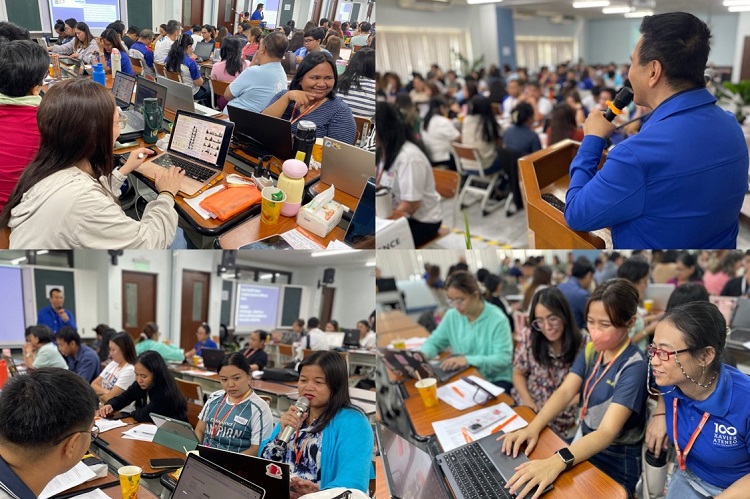
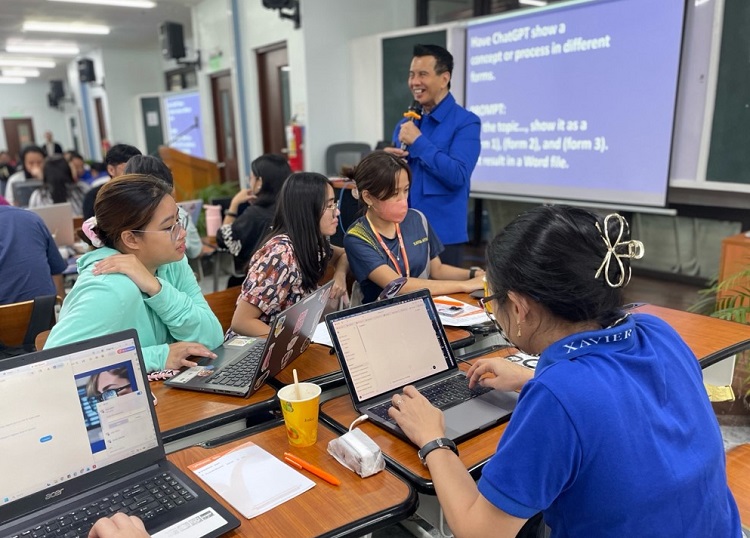
A major feature of the training was the integration of technology in developing classroom activities where teachers explored how ChatGPT prompts could generate differentiated tasks, real-life applications, and examples of concepts.
“The demonstration of using ChatGPT prompts was very helpful because it showed how technology can assist teachers in preparing engaging and inclusive learning materials,” said XUBE teacher, Trifon Mosal.
The teachers also explored Diffit for Teachers, an AI-assisted tool for creating differentiated learning materials, which were treated not as replacements for teachers’ judgment, but as resources that could support more intentional lesson preparation.
Building Participation through Flexible Strategies
Beyond the use of AI, the training introduced learner-centered strategies that could encourage participation and collaboration.
Teachers examined flexible grouping, which allows students to work together based on their readiness levels, interests, or learning needs. They also reviewed collaborative approaches such as the Jigsaw Method and Compass Points, with emphasis on assigning clear roles and conducting processing activities after group work.
The World Café strategy was introduced as a peer-learning activity, while Station Rotation was presented as a structured approach involving teacher-led, collaborative, and technology-assisted stations.
Dr Rapatan pointed out that Station Rotation can promote engagement, provide timely feedback, and help teachers correct misconceptions.
XUBE teacher Rosemine Balingit said that interactive strategies such as World Café, Learning Menu, and self-reflection outputs could make lessons more enjoyable and motivate learners to participate actively. She added that effective teachers select strategies that fit both the topic and the diversity of learners in the classroom.
Aligning Strategies, Outputs, and Evidence
Dr Rapatan stressed that identified UDL-DI strategies should be aligned with lesson tables, classroom activities, and expected learning outcomes.
Participants discussed the importance of documenting evidence of learner participation, including completed worksheets, online exercises, and other outputs that demonstrate skill development.
The teachers were also reminded to review AI-generated answer keys before using them and to check whether learning materials are accurate, realistic, and understandable for pupils. In activities involving multiple perspectives, proper representation must be observed to avoid stereotypes.
“This is the first time that I have used MagicSchool AI to adjust a lengthy article to the Lexile level of my students. I find this helpful as I plan to incorporate it into my lesson plans to assist students who experience difficulty comprehending texts, thereby supporting my differentiated instruction,” said English teacher, Djevonah Ogoy.
The Day 2 afternoon session was allotted for simultaneous breakout sessions of grade-level presentations of outputs, allowing teachers of each grade levels to receive feedback and refine their outputs in preparation for the opening of classes.
“As a Grade 3 Math teacher, I learned that learners understand Mathematical concepts in different ways, so lessons should be designed to provide multiple opportunities for learning,” said Jeanelyn Tabaranza.
“Instruction should be flexible and responsive to the learners’ readiness levels, interests, and learning needs so that no child is left behind,” she added.
The office of the Vice President for Basic Education, together with Basic Education administrators, is committed to providing a series of needs-based and responsive teacher training programs designed to strengthen instructional practice and support the attainment of PAASCU recommendations.
The training-workshop with Dr Rapatan is one of four In-Service Training sessions designed to equip Basic Education teachers with the knowledge, skills, and tools needed to navigate the challenges of education and learners’ needs set in a VUCA (Volatile, Uncertain, Complex, and Ambiguous) world.

Photos by: Michael Catacutan, Lee Marvin Sabio & Terence Maceren
Correspondence: Sophia Galendez & Aileen Mamaran