By Kevin Pacana
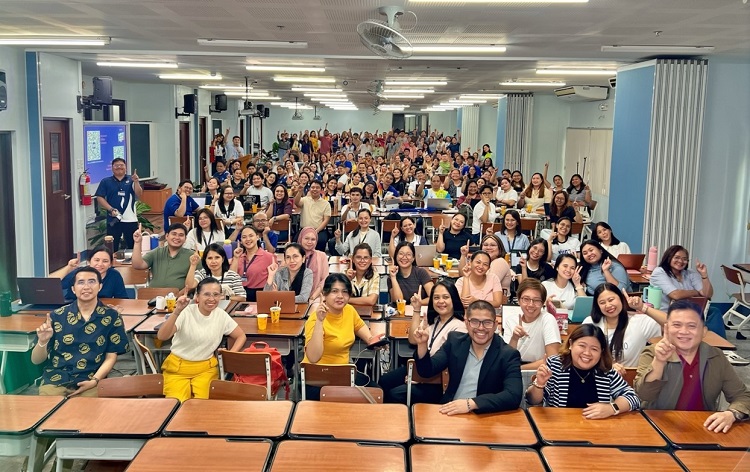
To future-proof the coming academic years, Xavier University Basic Education teaching community sealed its tri-term plans and completed its strengthened SHS curriculum from 25 to 26 May 2026 at the AVRs1-4, as part of its continuing in-service training series.
The 2-day series 2 training focused on academic directions, Purposeful Learning Unit Summary (PLUS) calendar, academic conversations and lightning talks, and Edtech mini-courses.
Moving toward greater heights
Day 1 opened with engagement activities that teachers could adapt for classroom use while allowing participants to deepen their familiarity with the Basic Education community.
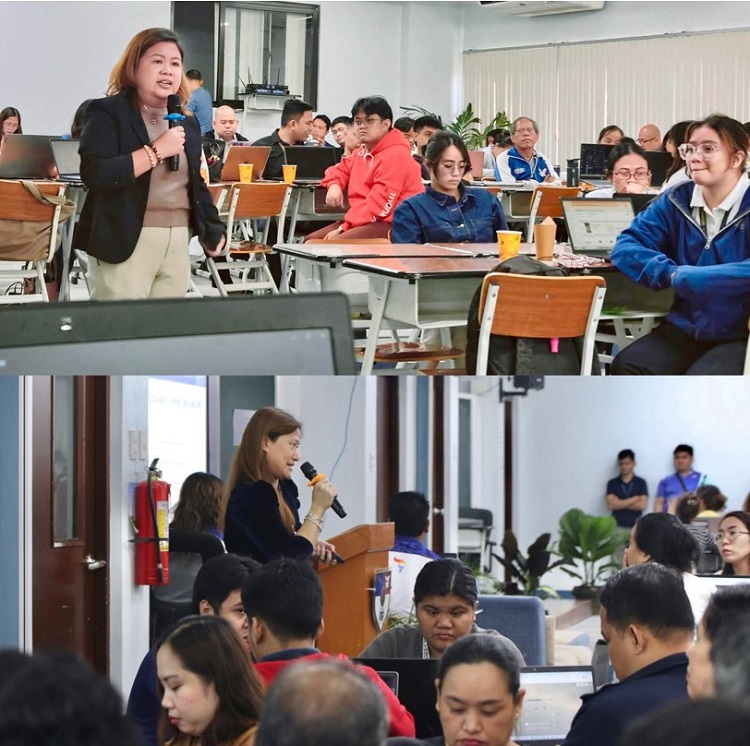
XUSHS Principal, Dr Rogelio Gawahan, presented the accomplishments, strategic priorities, and upcoming projects of the Basic Education units through his talk, Bolder Steps, Greater Heights for Basic Ed: Seeing the Direction Amidst the Shift.
Dr Gawahan emphasized that the planned initiatives support the vision of XUBE to become the premier choice for basic education in Mindanao.
His presentation encouraged the faculty to see institutional changes not as isolated adjustments, but as deliberate steps toward a clearer and more cohesive direction for Basic Education.
Navigating the academic shift
The session continued with XUJHS Principal Lea Lilibeth Emata’s talk, Into the Next ShiftEd.
Ms Emata explained that the changing academic landscape is comparable to environmental conditions and global realities that are happening today. She stressed that the shift toward a tri-term academic structure, together with the alignment of assessments, should be understood as a meaningful transformation rather than a merely transactional change.
Despite the restructuring, she reaffirmed that the heart of Jesuit education remains central across the Basic Education units, particularly embedded in teaching for cohesiveness and clustering competencies.
Beginning in June, the XU Grade School and XU Junior High School units will adopt a tri-term academic calendar.
With the transition, Ms Emata called on the XUBE community to strengthen its partnership with parents through transparent communication, shared interventions, and a renewed commitment to supporting learners.
The afternoon session guided teachers to work on Purposeful Learning Unit Summary (PLUS) calendars for their respective grade levels and learning areas.
The activity allowed faculty members to review the prioritization of competencies, pacing, sequence, and alignment under the tri-term system. It also provided an opportunity for teachers to identify how lessons, assessments, and learning activities could be organized more intentionally within the revised academic calendar.
The session concluded with an Examen led by Scholastic John de Paz, SJ, inviting participants to reflect on the day’s discussions and their role in navigating the transition.
Strengthening digital readiness & responding to academic needs
Day 2 was opened by Harriet Fernandez, Director of Computing and Information Services Office, with her talk on Office Productivity Tools Updates, Cybersecurity, and CISO services.
Fernandez stressed how educational technology tools could improve efficiency in teaching and administrative work and the importance of critical cybersecurity measures to protect institutional and personal data in digital spaces.
The discussion provided an opportunity to address common concerns on Microsoft Office 365 licensing and access to productivity tools among the Basic Ed teachers.
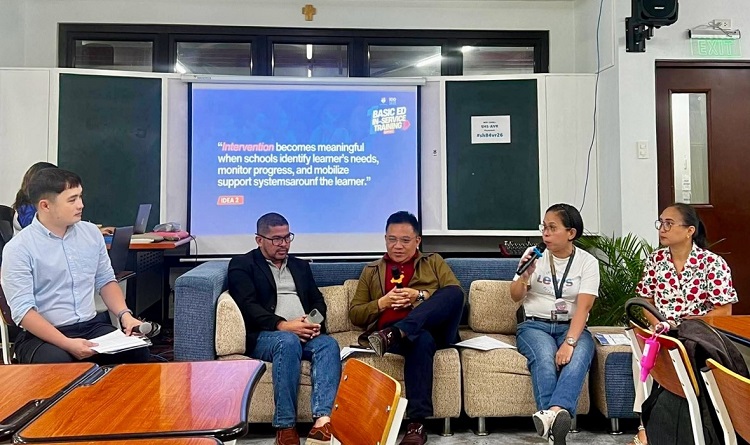
Facilitated by the Basic Education Educational Technology Specialist, Juanito R Oliveria II, a panel discussion followed featuring XUBE administrators which tackled key concerns affecting learners and teachers, including learning gaps and foundational skills, intervention and remediation, inclusive education, artificial intelligence in education, and socio-emotional learning.
The discussion included XUGS Principal, Danilo Zapanta, XUSHS Principal, Dr Rogelio Gawahan, as well as OIC Assistant Principals and Academic Chairpersons Lorievic Carmelotes and Dinafe Rara.
When asked how schools should address learning gaps, Zapanta emphasized the need to provide focused support for students who encounter difficulties.
“It would be a failure for teachers to focus solely on students who are already high performing,” he said, stressing the urgency of assisting learners who struggle.
Rara added that the Basic Education units coordinate with the guidance office to ensure that identified students receive not only academic interventions, but also appropriate social support.
The panel discussion highlighted the importance of shared responsibility in responding to learner needs. It also emphasized that effective intervention requires coordination among teachers, administrators, guidance personnel, parents, and the learners themselves.
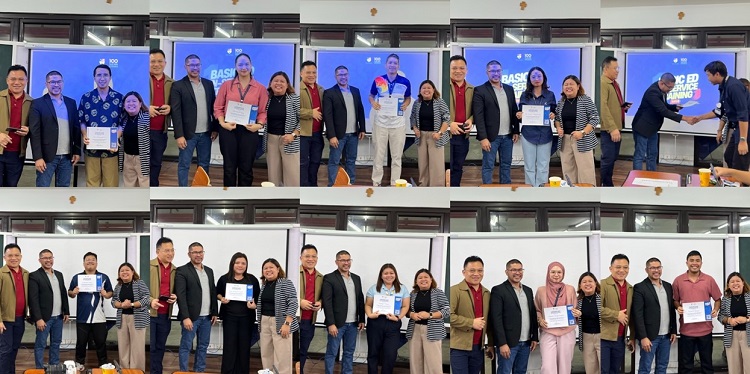
The afternoon session brought teachers to EdTech breakout sessions featuring 10 micro-courses on Microsoft Teams and Canva for Education.
Using a Course Passport, the BE teachers attended the assigned courses and moved from one session to another. The rotation allowed them to explore practical tools for communication and collaboration, while refreshing their knowledge on these tools.
Facilitating the mini-courses were Basic Ed Champions, Anito Librando Jr, Djevonah Ogoy, Gerald Ofianga, Amanie Hadji Ibrahim, Cheeney Baula, Dale Christy Castino, Lee Marvin Sabio, Royette Earl Ambulo, Ma Jessela Maglasang, and Michael Lester Catacutan.
Through plenary sessions, panel discussions, workshops, and breakout courses, the training aimed to help teachers respond more effectively to academic shifts while strengthening collaboration across the Grade School, Junior High School, and Senior High School units.
Photos by: Sophia Galendez, Edgie Echem, Lee Marvin Sabio & Lorievic Carmelotes